


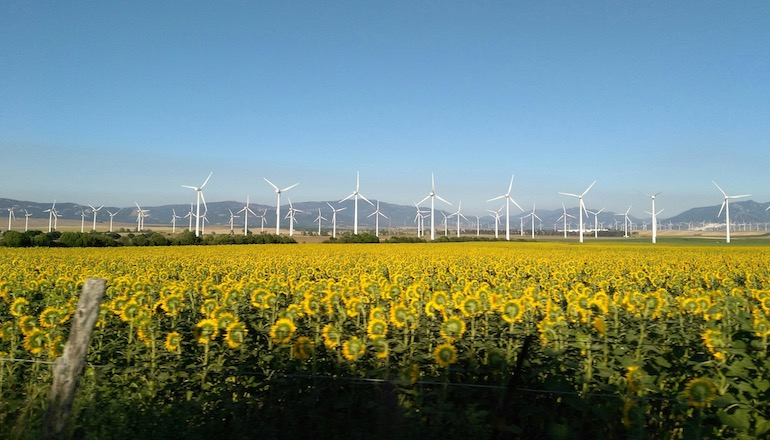
Wind and solar costs declined by more than 10% in 2019, according to Capgemini’s latest World Energy Markets Observatory (WEMO) report.
The WEMO report observed “consistently lower costs being recorded month after month”.
Lithium ion batteries used in stationary storage and electric vehicle markets decreased by 19% in 2019, WEMO found with 115 lithium ion battery megafactory projects having been announced, with 88 of these based in China.
Other “key observations” of the 2020 edition of the WEMO report include the significant drop in consumption due to Covid-19, which has led to the largest reduction of greenhouse gas (GHG) emissions since World War 2, though long-term climate change goals are still very challenging.
Emissions are expected to decrease by an estimated 7-8% in 2020, as a result of mobility restrictions and a sharp industrial slowdown.
With the worldwide economic growth slowdown in 2019, GDP growth for G20 countries was 0.8 percentage points below the previous year and energy demand growth slowed down with consumption increasing by just 0.7%, as compared with 2.2% in 2018.
While global emissions continued to increase by 0.6% in 2019 (highest level ever), those in the energy sector specifically fell 0.4% due to a combination of factors including.
These include a shift from coal to gas, renewables growth and energy efficiency improvements.
Capgemini energy and utilities senior advisor Colette Lewiner said: “This 2020 emissions decrease is linked to the lock-down period and remaining mobility restrictions.
“Emissions will likely rise again as the world recovers from the pandemic. By way of illustration, it would take a similar restriction, every year for the next 10 years, to get on the right environmental trajectory, which is of course unviable. Profound changes are needed to reach climate change objectives.”
The WEMO report pointed that with the increasing share of intermittent renewables generation (wind and solar power), grid balancing is more difficult, and security of supply could be endangered.
This situation was illustrated both in Europe and the US this year.
In April 2020, during lockdown, electricity consumption decreased in Europe, combined with sunny and windy weather, resulted in high shares of renewable electricity on the grid.
Near blackouts happened in Germany and in the UK, demonstrating that grids and regulations “have not adapted” to deal with the high share of renewables planned for the end of the decade, the report stated.
Capgemini energy and utilities head Philippe Vie added: “Numerous digital tools and assets are mature and available to improve predictability, reliability, grid stability and finally security of supply, accelerating Energy Transition.”
The WEMO report is an annual publication by Capgemini that monitors the main indicators of the electricity and gas markets in North America, Europe, Asia (including China and India) and Australia.
This year’s edition covers for the first time pressure on oil and gas majors that will lead to diversification and carbon neutrality.