


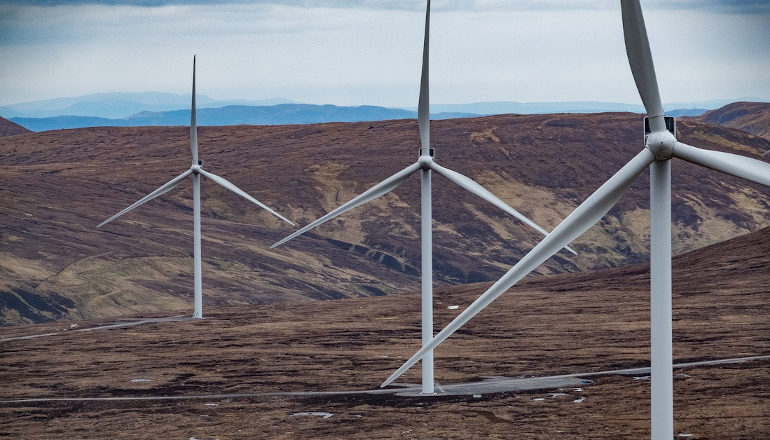
Results of a UK project show how wind generated electricity could be absorbed by domestic heating in Scotland in 2030, saving £24m per year in wind constraint payments.
The 4D Heat project, led by Scottish and Southern Electricity Networks (SSEN) and National Grid Electricity System Operator (ESO), found up to 540 gigawatt-hours of wind could result in the benefits across Scotland’s off-gas grid homes.
The project also identified £2m annually in other environmental and social benefits.
4D Heat, funded by Ofgem’s Network Innovation Allowance (NIA), set out to identify whether the flexible demand from electric heat could be matched to occasions when wind farms are generating more wind energy instead of being carried across the transmission network.
The research, modelling and analysis was carried out by Delta-EE, Everoze and PassivSystems.
While many homes already use electric heating, advances in digital technologies and an increase in low-carbon generation are creating a smarter, flexible energy system.
4D Heat analysed an off-gas grid area in Skye and extrapolated findings to off-gas grid Scotland, to explore the ability of flexible demand from heat to absorb wind power that would otherwise have been curtailed due to transmission constraints.
Constraint management is required where the electricity transmission system is unable to transmit power to the location of demand, due to congestion at one or more parts of the transmission network and currently costs around £500m per year.
The goal for 4D Heat was to make better use of clean power without increasing costs for the ESO, DSO or end consumer.
The analysis found that 17% of curtailed wind could be used by electric heating systems in 2020 and 9% in 2030 (when the forecast 2030 wind curtailment is around three times the total off-gas grid electric heating load), with corresponding CO2 savings.
The project also found that by 2030 some households could be saving 18% on their annual energy bill.
SSEN 4D Heat project manager Kate Jones said: “This is a timely report given the increasing interest in decarbonised heat from national and devolved governments.
“The 4D Heat project shows that the potential role for electrified heat in helping to balance the grid and to save money for network operators and their customers, is significant.
“Findings from this report will help inform how we work with diverse stakeholders across the energy market in the transition to decarbonised heat, including the ESO, flexibility providers and vulnerable customers who are currently more likely to be dependent upon electric heating.
“This report also helps identify a number of challenges that will benefit from further work, to realise the full benefits of this approach.
“We look forward to adopting this timely report’s recommendations and using them to support an efficient and equitable transition to low carbon heat, putting our customers at the heart of the process.”