


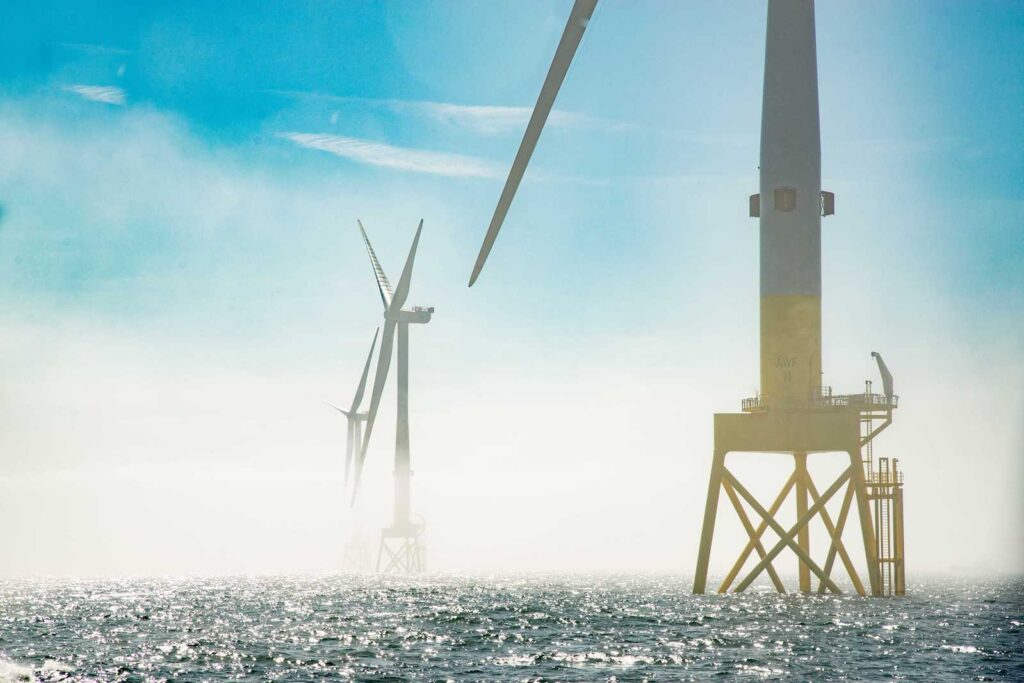
Vattenfall’s 97MW Aberdeen Bay offshore wind farm could generate £5m a year for the local economy over its 20-year life span, according to new socio-economic research carried out by Oxford Brookes University.
Spending on the wind farm, also known as the European Offshore Wind Deployment Centre (EOWDC), linked to operations and maintenance (O&M) is likely to lead to the creation of between 40 and 50 full-time equivalent jobs each year, the research found.
These jobs would be creared through locally-based contracts with suppliers and onward spending within the local community, the report said.
The research assessed the socio-economic impacts of offshore wind farms, using the Aberdeen Bay as the main case study.
The study is part of a much larger £2.75m research programme hosted at the EOWDC which also examines bird and marine life around offshore installations.
The wind farm’s community development fund – Unlock our Future Fund – has so far awarded over £200,000 to projects that enable fossil fuel-free initiatives in local communities, the report said.
The awards include a contribution to the development of an interactive environmental education facility, and grants for low carbon heating initiatives such as air source heat pumps for community buildings in Newburgh.
Funding was also awarded to purchase an electric vehicle for a home for adults with special needs, Vattenfall said.
However, while the research found that that the planning and development, onshore construction, and O&M phases underestimated the value to the local and Scotland-wide economies, it also found that the value of the offshore construction stage to these areas was overestimated.
Survey work on the substation employees indicated around 60% of the onshore construction workforce came from the Aberdeenshire area, and most of the remaining 40% from the rest of Scotland.
In contrast, due to the small nature of the project, the short construction period, and the availability of workers with the required skills, a large percentage of the offshore construction team came from outside the local area.
Based on the data available, the offshore construction workforce is believed to have consisted of around 10 Scots among a peak workforce of 500 people.
The expertise and equipment required for offshore construction were also so specialist that suppliers for the offshore construction phase were difficult to source within the UK at the time.
Vattenfall said that building on the experience gained constructing Aberdeen Bay, it has been working to help address the skills and supplier gap, with more than 60 supply chain meetings having taken place across the country since 2018, reaching over 600 local and UK companies and stakeholders.
Education and apprenticeship programmes in Kent and Norfolk have also been set up.
Aberdeen Bay O&M manager Alexandra Richards said: “Despite having just 11 turbines, albeit some of the most powerful in operation in the world today, Aberdeen offshore wind farm is already proving its worth to the local area.
“We couldn’t be prouder of what our wind farm means for Aberdeenshire, and through the Unlock our Future Fund, the project will leave a legacy even after it has reached the end of its lifespan.
“There’s a tendency to assume that the opportunities linked to wind farms begin and end with construction.
“But as this study shows, the main advantages for the community and local economy come from the long-term operations and maintenance phases, which generate significant amounts of spending and jobs.
“With the Prime Minister having just announced ambitious plans for a huge increase in the UK’s offshore wind capacity, there’s a massive opportunity to build up the supply chain in this country.
“It’s very likely that much larger offshore wind farms, like Vattenfall’s planned Norfolk Vanguard and Boreas projects, will be worth billions of pounds to the economy over their lifespan, with multiple benefits for communities close by.”
Oxford Brookes University research lead for the report team John Glasson said: “The impacts of offshore wind farms on the human environment, and especially on local and regional communities adjacent to such projects, is an under-researched area.
“Such communities are often suffering greatly from the decline in traditional industries, such as shipbuilding, fishing and tourism.
“Human environmental impacts include a wide range of social and economic issues. However, a lack of knowledge on the actual impacts of such projects can greatly hamper case management.
“There is a need for adequate planning and assessment tools for the key stakeholders – developers, consultancies, local, regional and national governments, development agencies and the general public- who are the audience for this Guidance Report.
“The aim is to aid the enhancement of local benefits and facilitate a positive developer-community relationship over a project’s lifecycle.”