


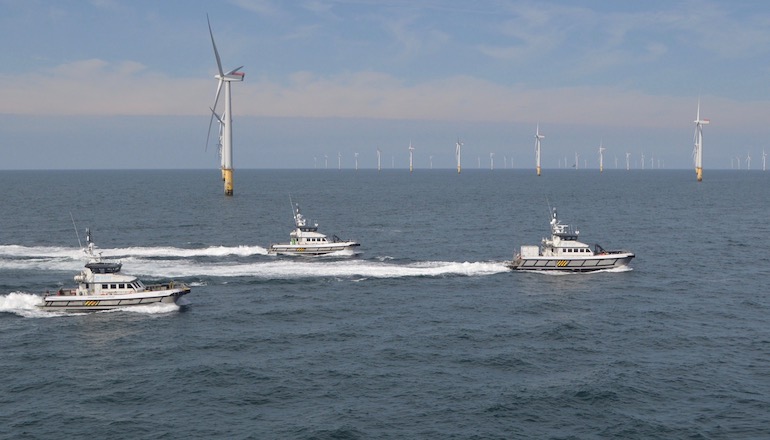
Seacat Services has ordered two next-generation multi-hull crew transfer vessels (CTVs) from naval architects BAR Technologies.
The first of the BARTech 30 vessels, which were designed in partnership with Chartwell Marine, is expected to be completed by the first quarter of 2022.
They will be named Seacat Columbia and Seacat Cambria and will reinforce the company’s commitment to the decarbonisation of the workboat sector, it said.
Seacat said BAR Technologies and Chartwell Marine have focused on creating fuel efficiency through a highly optimised multi-hull design, working alongside the former’s patented foil optimised stability system.
The will cut CO2 emissions by up to 600 tonnes a year if working on a 12 hour shift of operation, the company added.
Seacat Services managing director Ian Baylis said: “After reviewing the latest options on the market, the BARTech 30 is the first one that has met and exceeded all of our requirements, embracing efficiency gains through design, instead of relying exclusively on hybrid propulsion.
“Adding this vessel to our existing fleet of OESVs is a simple, effective way to get ahead on emissions reduction without interrupting our current work scope.”
Technologies chief executive John Cooper said: “Innovative vessel design and technologies are vital to supporting the offshore wind and maritime sectors.
“Seacat has a long history of setting the benchmark for operational best practice and we are delighted to help them continue to refine their winning formula, while creating a new fuel efficiency standard.
“The OEMs have consistently told us they want to reduce emissions in the supply chain, so we are proud to be delivering to brief.”
Chartwell Marine managing director Andy Page said: “Every step forward in vessel design and efficiency must be taken with the needs of the end user in mind.
“The BARTech 30 capitalises directly on operational feedback from leading firms like Seacat Services to ensure that emissions reduction is effectively realised – without being at the expense of technical capability and the service provided to offshore wind firms.”