


A multi-user, planned transmission system for offshore wind in New York could achieve grid cost savings of over $500m, according to a new study produced by the Brattle Group.
Other benefits include “significantly reduced” environmental impacts and project risks if a multi-user, planned transmission system can be developed.
The report, Offshore Wind Transmission: An Analysis of Options for New York, evaluates the challenges of connecting each wind farm to shore individually in comparison to a planned approach.
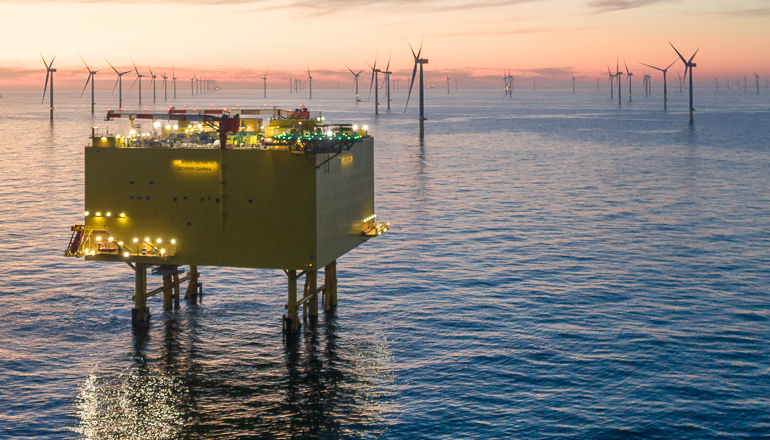
Such an approach would comprise a high-capacity offshore wind transmission system serving multiple wind farms, reducing marine cabling, and optimising onshore landing points and substations.
The study found that planned offshore transmission “significantly” reduces seabed marine cabling by almost 60%, avoiding over 800km of seabed disturbance and reducing impact on fisheries and marine ecosystems.
The report also quotes studies of UK offshore transmission and US onshore transmission trends to show that a planned approach increases competition for offshore wind generation and can transmission costs by 20-30%.
Brattle’s research, supported by engineering companies PTerra and Intertec, underscores the “pivotal role of transmission planning” in the development of New York’s offshore wind industry.
The study found the approach of relying on individual generator lead lines would require extensive onshore grid upgrades costing four times as much as a planned approach.
A planned transmission system reduces would use fewer cable routes and more robust grid connections, mitigating need for “expensive, disruptive onshore transmission upgrades, thereby also reducing the impacts on the marine environment and coastal communities”, said the analysis.
Brattle principal Johannes Pfeifenberger said: “Substantial additional offshore wind development will be necessary to achieve New York’s clean energy goals.
“At the scale considered by New York, a planned approach to offshore transmission will significantly reduce the environmental footprint and the overall costs and feasibility risks of offshore wind generation.”
Anbaric New York OceanGrid president Kevin Knobloch said: “Developing a shared ocean grid is critical to achieving New York’s ambitious offshore wind goals.
“The next phase in achieving New York’s goals depends on building transmission infrastructure in a way that reduces overall costs and feasibility risks, protects fisheries, coastal communities and the environment, and enables developing the offshore wind industry to scale.”