


Prysmian is introducing a new organisational structure and made two major management appointments within the company’s projects business to help it “capitalise on opportunities from the energy transition”.
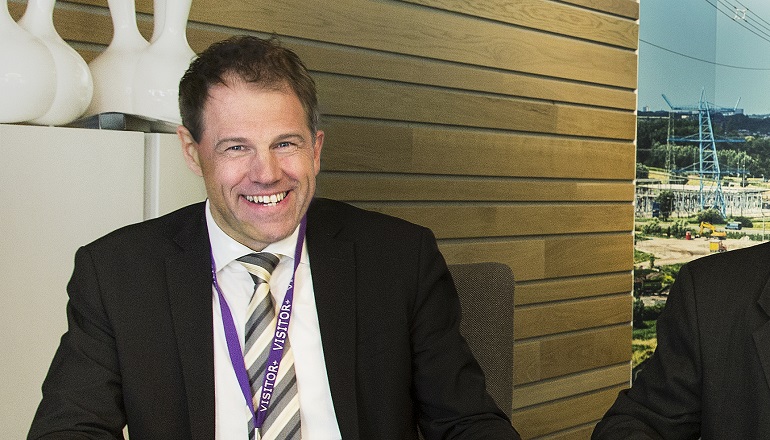
Detlev Waimann has been appointed chief commercial officer of Prysmian’s projects business, responsible for high voltage submarine and underground cable systems for power transmission, as well as subsea cables for offshore wind, interconnectors and other projects.
Waimann will lead the submarine power, submarine telecom, high voltage underground and offshore specialties subsegments.
Alberto Boffelli will take on the role of chief operating officer within the projects business. He will be responsible for projects’ delivery phases’ including installation and operations areas.
Meanwhile, the company’s turnkey submarine power and extra high-voltage underground cable systems will be re-branded “Powerlink. A brand of Prysmian Group” to “differentiate them and raise the visibility of one of the group’s businesses with the greatest added value and technological content”.
The other ranges, which supply only submarine power and extra high-voltage underground and offshore specialties, will be branded “Prysmian. A brand of Prysmian Group”.
Prysmian said the organisational change and appointments aim to ensure the “perfect execution” of the recently secured German Corridors cable projects.
For these, the company is responsible for underground cable connections to carry more renewable energy generated in Germany’s north, to more southerly regions, where it is consumed.
Prysmian projects executive vice president Hakan Ozmen said: “We are ready to tackle the challenges of the energy transition by leveraging on our state-of-the-art technologies, wide range of assets and installation capabilities, and our highly skilled organisation and human resources.
“Cables are the backbone of power grids, and having a reliable, smart and widespread power transmission network is essential to carry renewable energy from the regions where it is generated to those where it is consumed, enabling the shift towards a low-carbon economy.