


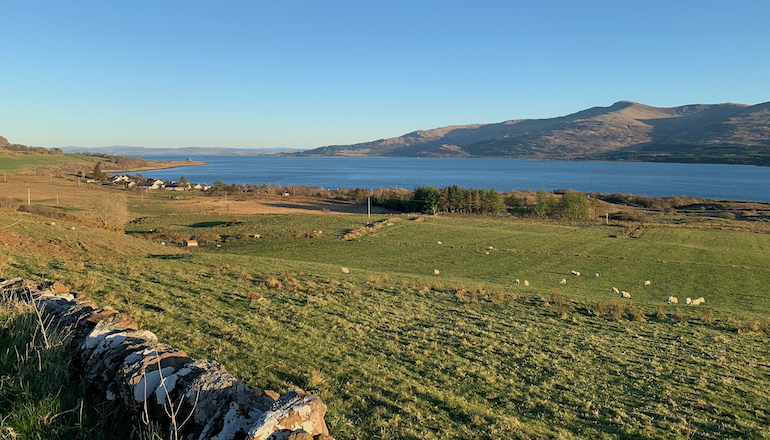
The Morvern Community Development Company has worked with Triodos Bank UK and the Scottish Investment Bank to secure finance to support the development of a high-head hydropower scheme on the Barr River near Loch Teacuis, Scotland.
Once installed, the scheme in Morvern in Lochaber is expected to have a 1.6MW capacity and to generate approximately 4,269,000 kilowatt-hours of electricity a year.
The scheme will take approximately 14 months to build and is expected to operate for at least 50 years.
The community has been exploring the potential for a shared-ownership hydropower scheme since 2013.
The new finance will help with the construction and operation of the hydropower scheme by MorVolts, a wholly-owned subsidiary of the Morvern Community Development Company.
Morvern Community Development Company is a registered charity that aims to benefit the community of Morvern.
Triodos Bank is providing a £4.26m loan loan, while a further £2.23m will come from the Energy Investment Fund, which is administered by the Scottish Investment Bank on behalf of the Scottish Government.
Morvern Community Development Company chair Jane Stuart-Smith said: “We are delighted to have reached financial close and can now begin building the scheme.
“Getting to this point has taken a huge investment of local volunteer effort sustained over many years.
“Morvern is a delightful place to live and work but it faces challenges to maintain a sustainable community in a remote rural community location.
“MCDC has a strong track record in creating and delivering local infrastructure projects. The income from the scheme will be an important source of investment into the local development priorities.
“There is an increasing focus on community involvement in energy networks. The scheme also gives the Morvern community a strategic stake in the energy supply on the peninsular.”
Scottish Minister for Energy, Connectivity and the Islands Paul Wheelhouse said: “I am pleased that Morvern Community Development Company’s MorVolts Barr Hydro scheme has reached financial close.
“Morvern are a fantastic example of what an empowered community can achieve, with a great track record in project delivery and actively engaged in planning for their future.
“The Scottish Government through our Community and Renewable Energy Scheme delivered by Local Energy Scotland, has been assisting Morvern since 2014, providing both advice and funding support and I am pleased our Scottish Investment Bank has been able to contribute £2.23m through the Energy Investment Fund to make it happen.
“At 1.6MW, the scheme is, I understand, the largest hydro in the UK to be entirely community-owned and that is a tremendous achievement for Morvern.
“I am also really delighted that all profits from the project will be channelled back into the community to support local priorities and, I am sure, this will make a real and positive difference to the lives of local people and this is why we are keen to see more projects such as this.”
Triodos Bank UK environment manager Philip Bazin said: “This is a great example of a community energy project – bringing people and organisations together to do something for both people and planet.
“It is encouraging to have success stories like this right now of people coming together to overcome the challenges brought about by the current crisis.”
Morvern Community Development Company said many different groups have come together to make this work, including the Scottish Government, Scottish Investment Bank and Forestry Land Scotland.
Scottish Investment Bank director Kerry Sharp said: “Scotland has been harnessing the power of water through hydro-electric schemes for more than one hundred years, particularly in the Highlands where hydro has been crucial in connecting remote rural communities to the grid.
“As well as being a big part of Scotland’s energy past, the support for the Barr River project proves that hydropower can be a major part of Scotland’s energy future.
“We’re genuinely excited to help MCDC continue to capitalise on Morvern’s natural and built environment for the benefit of the local community.”