


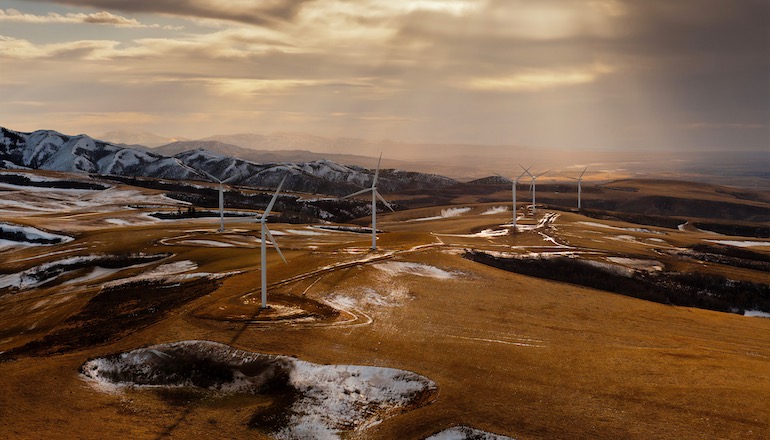
Uzbekistan has devised a low-carbon energy strategy to aid its transition to renewables and cleaner power sources while meeting increasing energy demand.
The country’s Ministry of Energy said it believes the current energy production system in Uzbekistan could benefit from “modernisation and exposure to the very latest low-carbon technologies”.
The ministry drew up the strategy with support from the European Bank for Reconstruction and Development (EBRD), and international consulting company Corporate Solutions.
Corporate Solutions is modelling Uzbekistan’s energy system against the experiences of Germany, Japan and Spain to learn from their respective low-carbon transitions.
The information gathered will help “shape” Uzbekistan’s own strategy and the process of attracting international investment.
Uzbekistan plans to develop alternative energy sources, including solar, hydro and wind, to produce electricity with low carbon emissions, in line with nationally determined contributions under the United Nations Framework Convention on Climate Change.
It is also building Central Asia’s first nuclear power plant, to provide the country with uninterrupted and electricity on an industrial scale.
Uzbekistan energy minister Alisher Sultanov said: “We are pleased to be working closely with the European Bank for Reconstruction and Development, and the international consulting company Corporate Solutions in the development of our low-carbon energy strategy.
“The transition to low-carbon energy will make it possible to provide our country with electricity at a high growth rate and improve our citizens’ quality of life.”
The strategy follows the recent publication of a 10-year plan for electricity provision in Uzbekistan developed with the Asian Development Bank and the World Bank.
This aims to deploy up to 30GW of additional power capacity by 2030, including 5GW of solar energy, 3.8GW of hydro energy, 2.4GW of nuclear energy and up to 3GW of wind.
Priority activities outlined include modernisation and reconstruction of existing power plants, construction of new generating assets using energy efficient power production technologies, improvement of power metering, fuel diversification and development of renewable energy sources, especially solar, and legal reforms to improve tariff polices and to aid transition to a wholesale market.