


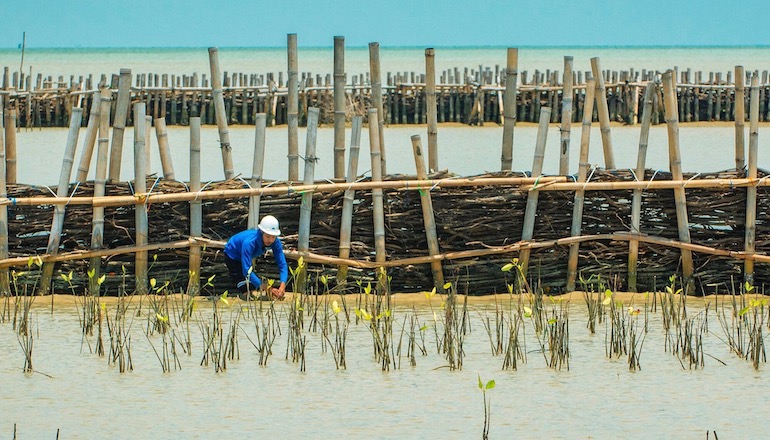
Dutch global dredging and marine contractor Boskalis is working with NGO Wetlands International to enhance and restore coastal wetland habitats that, not only support coastal protection and fisheries, but store some of the world’s largest quantities of carbon.
The agreement will see the two organisations first focus on developing the expertise and knowledge of ‘blue carbon’ ecosystems that can contribute to climate targets, adaptation and biodiversity conservation.
‘Blue carbon’ refers to the carbon stored by the world’s coastal ecosystems, mostly mangroves, salt marshes and seagrasses.
“With increasing risks of flooding and erosion, the impacts of climate change on coastal systems and communities are becoming ever more apparent,” the partners said.
“The dredging sector has a large role to play in safeguarding these areas, providing innovative ways to protect coastlines and introducing adaptive measures,” they added.
Boskalis and Wetlands International have worked together for several years as members of Ecoshape, a consortium developing ‘building with nature’ principles to support nature-based flood defenses, coastal restoration, resilient deltas and sustainable ports.
Projects undertaken together include the ‘Building with Nature Indonesia’ programme, where mangrove rehabilitation and nature-based coastal protection provide a foundation for local economy and community development.
Wetlands International chief executive Jane Madgwick said: “As natural coastal protection, carbon and water stores, wetlands are vital in helping communities and nature deal with the effects of climate change.
“Together with Boskalis, we aim to further develop our blue carbon knowledge and expertise to help nature-based approaches become best practice across the maritime and dredging sector.”
Boskalis chief operating officer Theo Baartmans said: “As a leader in the industry, Boskalis is keen to further develop nature-based solutions to protect and enrich coastal ecosystems from the consequences of climate change.
“By collaborating with Wetlands International we can combine our respective areas of expertise to protect and further enhance coastal wetland habitats in terms of biodiversity whilst simultaneously utilizing their potential to store carbon.”