


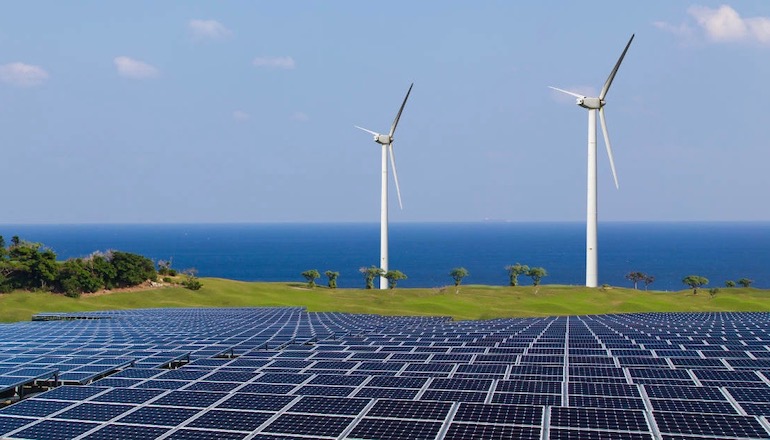
Investment in renewable energy needs to double to almost $750bn from $330bn currently to deploy clean power at the speed needed to achieve sustainable development goals and tackle climate change, according to the International Renewable Energy Agency (IRENA).
IRENA said in a new report – ’10 Years: Progress to Action’ – that the share of renewables in global power needs to more than double by 2030 to advance the global energy transformation.
Renewable electricity should supply 57% of global power by the end of the decade, up from 26% today, it said.
The report charts recent global advances and outlines the measures still needed to scale up renewables.
IRENA said much of the needed investment in clean power can be met by redirecting planned fossil fuel investment.
“Close to $10 trillion of non-renewables related energy investments are planned to 2030, risking stranded assets and increasing the likelihood of exceeding the world’s 1.5 degree carbon budget this decade,” IRENA said.
IRENA director-general Francesco La Camera said: “We have entered the decade of renewable energy action, a period in which the energy system will transform at unparalleled speed.
“To ensure this happens, we must urgently address the need for stronger enabling policies and a significant increase in investment over the next 10 years.
“Renewables hold the key to sustainable development and should be central to energy and economic planning all over the world.
“Renewable energy solutions are affordable, readily available and deployable at scale.
“To advance a low-carbon future, IRENA will further promote knowledge exchange, strengthen partnerships and work with all stakeholders, from private sector leaders to policy makers, to catalyse action on the ground. We know it is possible, but we must all move faster.”
Additional investments bring significant external cost savings, including minimising losses caused by climate change as a result of inaction, IRENA added.
It said savings could amount to between $1.6 trillion and $3.7 trillion a year by 2030.
Falling technology costs continue to strengthen the case for renewable energy, the agency said.
IRENA pointed out that solar PV costs have fallen by almost 90% over the last 10 years and onshore wind turbine prices have fallen by up half in that period.
“By the end of this decade, solar PV and wind costs may consistently outcompete traditional energy,” it said.
The two technologies could cover over a third of global power needs, IRENA said.
The agency said its data shows that 60% of new electricity access can be met by renewables in the next decade with stand-alone and mini-grid systems providing the means for almost half of new access.