


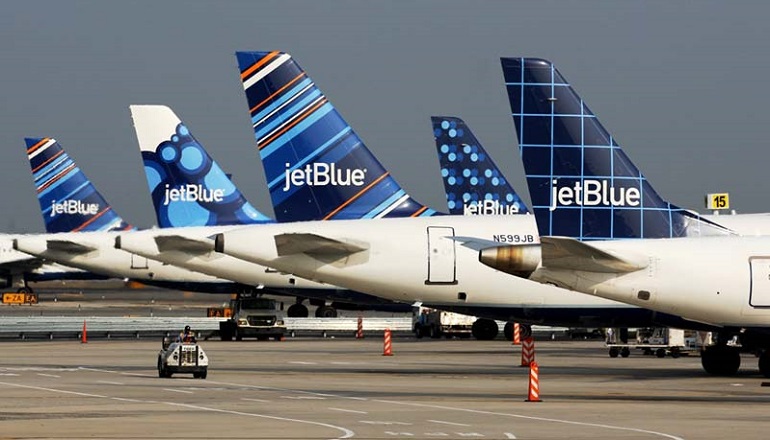
New York airline carrier JetBlue will offset carbon dioxide emissions from jet fuel for all domestic flights from July 2020.
The company said it will also start flying with sustainable aviation fuel in mid-2020 on flights from San Francisco International Airport.
JetBlue first began offsetting carbon dioxide emissions with programs to balance customer flying during specific times of year but is expanding those efforts to further reduce emissions associated with fuel use.
The expansion is expected to offset an additional 7-8 million metric tonnes) of emissions per year – the annual equivalent of removing more than 1.5 million passenger vehicles from the road.
“Air travel connects people and cultures, and supports a global economy, yet we must act to limit this critical industry’s contributions to climate change,” said Robin Hayes, chief executive officer, JetBlue.
“We reduce where we can and offset where we can’t. By offsetting all of our domestic flying, we’re preparing our business for the lower-carbon economy that aviation – and all sectors – must plan for,” he added.
JetBlue will continue to partner with Carbonfund, a US-based nonprofit carbon reduction and climate solutions organisation.
“The airline industry is one of the few industries that has collectively committed to an international emissions reduction goal,” said Hayes. “Carbon offsetting is a bridge to, not a silver bullet for, a lower carbon future. Reducing and mitigating our greenhouse gas emissions is a fundamental aspect of our business plan and our mission to inspire humanity.”
JetBlue has agreed to purchase sustainable aviation fuel (SAF) from Neste, the world’s largest producer of renewable diesel, starting in 2020.
The fuel is produced from waste and residue raw materials. Over the lifecycle, it has up to 80% smaller carbon footprint compared to fossil jet fuel.
The fuel is fully compatible with the existing jet engine technology and fuel distribution infrastructure when blended with fossil jet fuel. The fuel is being shipped via the fuel pipeline to the airport where it will be safely used alongside regular fuel without safety or operational impact.
JetBlue is continually exploring SAF options and views SAF as a critical part of the industry’s transition to a lower-carbon model.
As part of its offsetting programme, JetBlue selects projects around the globe that will offset the use of jet fuel. Many projects operate in less economically developed countries where a bigger community impact can be made.
Emissions reduction projects reduce the amount of greenhouse gas in the atmosphere in at least one of three ways – avoiding greenhouse gas emissions in favour of renewable sources, removing emissions from the atmosphere, and destroying emissions when possible.
JetBlue will support carbon offsets projects focused on but not limited to forest conservation projects, landfill gas capture and solar and wind projects.
All of JetBlue’s purchased carbon offsets are audited, verified and retired on the airline’s behalf.
The offsets will benefit physical projects and are verified and enforceable, as reputable carbon offset auditors have confirmed the claims behind a programme and the project is on a public database. These projects are also permanent and ongoing. The sale of carbon offsets help to finance the projects.