


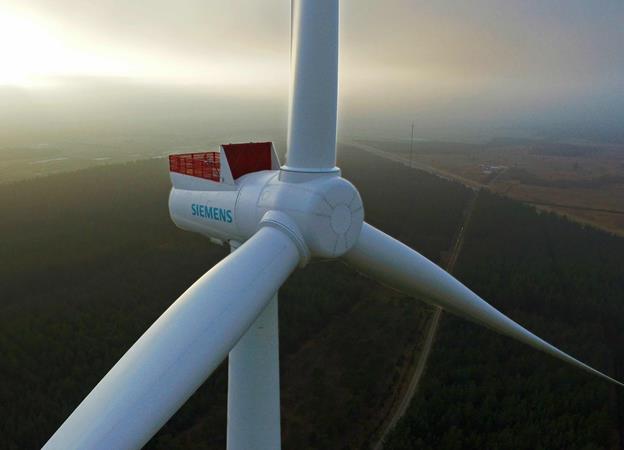
The renewables industry is in excellent health, but more policy work is needed to realise its full potential and avoid the worst effects of climate change, according to a KPMG study commissioned by Siemens Gamesa.
The report, which was published today, found low carbon sources and natural gas will cover at least 80% of the increase in global energy demand by 2040 and have been the main source of new power capacity for the past six years.
It also revealed debt markets’ demand for sustainable energy has increased from $5bn in 2012 to $247bn in 2018.
“We are now in an environment where there are not enough investment-ready renewable projects to satisfy what has become an insatiable demand from investors globally,” noted KPMG global renewables lead Michael Hayes.
However, the report found the transition to low carbon energy is not moving fast enough. Under a business as usual scenario, the world is not on track to achieve the UN’s seven sustainable development goals for 2030 and avoid serious climate change.
Under a more ambitious policy environment, wind can play a key role in meeting these sustainability goals, said the report.
If policies promoted by organisations like the International Energy Agency are fully enforced, wind could supply up to 34% of global electricity by 2040. That’s equivalent to the total combined power generation of China, Europe and the US today, according to the report.
Wind could also provide around 23% of the carbon emission reductions needed by 2030.
Hayes said it’s now up to governments to introduce the necessary policies if they are serious about sustainable development. “The issue of government is not just about support systems – it is also critical to deliver certainty in other areas such as availability of grid, land ownership and bankable PPA agreements,” he added.
Siemens Gamesa chief executive Markus Tacke called on policymakers to deliver on their promises. “Governments around the global have already committed to the UN agenda and Paris Agreement, but the political will is still lacking, as are long term strategies and investments to make those plans a reality.”
“Years of experience have taught us that clear emissions-reductions policies help low-carbon grow and become more competitive, making it easier and cheaper to reduce more emissions in the future.”