


Forecasting growth of Europe’s wind capacity is subject to “significant uncertainty”, according to WindEurope’s new ‘Wind Energy Outlook to 2023′ report.
The study has found that annual volumes of new wind capacity up to 2023 could range between 13GW and 22GW, and stated: “This uncertainty weighs heavily on the supply chain and could impact the significant cost reductions achieved in recent years.”
If governments end up producing clear and ambitious National Energy & Climate Plans (NECPs) and they improve the permitting arrangements for wind farms and they keep investing in new grid capacity, then Europe’s wind energy capacity would grow by 88GW to 277GW by 2023, according to the report.
However, it also stated that alternatively, if the NECPs are “unambitious and permitting issues persist”, Europe will install “much less new wind power, only 67GW”.
Permitting issues are already leading to undersubscribed auctions, notably in Germany, and lower installation rates than expected, according to WindEurope.
Conversely, if permitting “improves significantly” and the NECPs are “super ambitious”, then Europe could install 112GW during the forecast period, the report suggested.
Under all the scenarios over three-quarters of the new installations will be onshore wind. Spain, Sweden and Norway currently leading onshore wind growth.
The report points out that Germany is installing much less capacity this year than in past years, and its outlook remains “uncertain for the rest of the period, not least given recent policy decisions”.
France is expected to show continued steady growth in onshore wind.
The UK will account for 35% of the growth in offshore wind over the next five years, followed by the Netherlands and Germany.
In the next five years 22GW of wind energy capacity will reach the end of its normal operational life. Most of this will get a lifetime extension, the report states and around 2GW will be repowered, while another 2GW will be fully decommissioned.
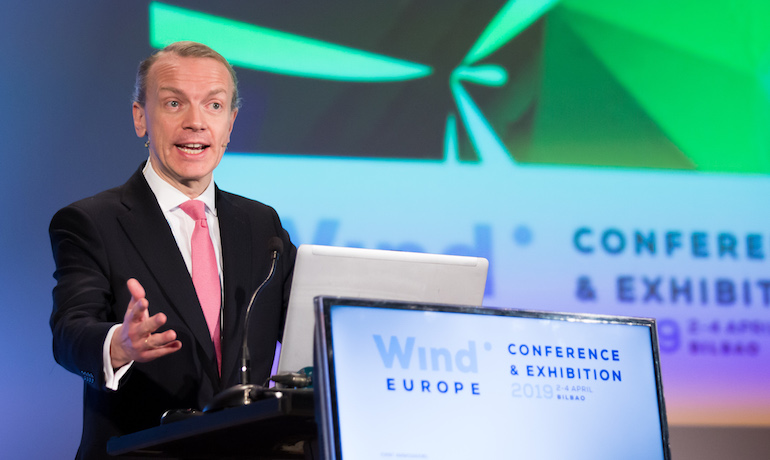
WindEurope CEO Giles Dickson said: “Wind energy should be growing rapidly when you consider all the interest in climate change plus the fact the wind is the cheapest from of new power energy production.
“But there is real uncertainty about how far it’s going to expand in the next five years. It’s getting harder to secure permits for new wind farms in many countries. The grids and energy markets are still not functioning as they should.”
Dickson said many governments haven’t decided yet “how much new wind they want and when and how they’re going to build it”.
He added: “The 2030 NECPs will be crucial in bringing clarity and improvements in all these areas. If they’re not ambitious we won’t meet the 32% renewables target let alone any higher targets.”
Dickson also highlighted how uncertainty puts jobs at stake.
“The wind industry employs over 300,000 people in Europe but has lost 35,000 jobs in Germany alone over the last four years in large part because of public policy issues. The European Green Deal needs to include a clear industrial policy for Europe’s low-carbon industries: supporting the success stories we’ve established; ensuring we can continue to trade with the rest of the world; and driving continued innovation to stay competitive.”