


Blade maker TPI Composites recorded a net loss of $12m (€10m) during the first quarter (Q1) of 2019, which the company said was mainly due to revenue reductions related to business with the insolvent Senvion.
In the same period last year, TPI had a net income of $8.6m.
Earnings before interest, tax depreciation, and amortisation (EBITDA) for the quarter fell to a loss of $4.1m, compared to a positive EBITDA of $21m during the same period in 2018.
Adjusted EBITDA for the quarter decreased to $2.9m compared to $27.4m during the same period in 2018, with the adjusted EBITDA margin falling to 1%, compared to 10.8% during the previous period.
As a result, TPI has updated its guidance to reflect current expectations for 2019.
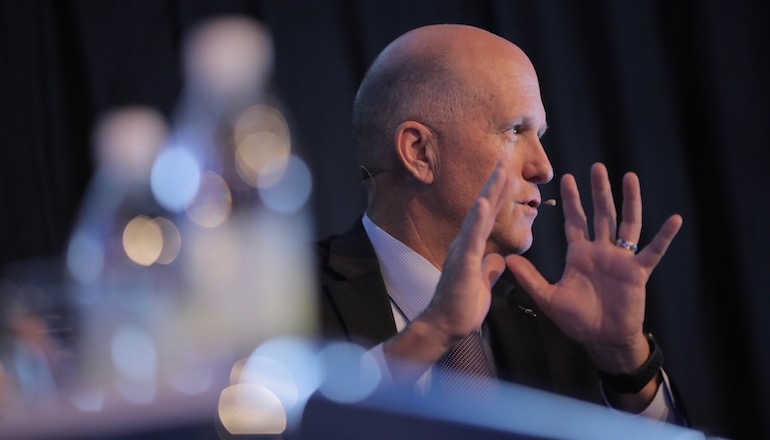
Company chief executive Steve Lockard (pictured) said the company expects 2019 net sales to be between $1.45bn and $1.5bn and 2019 adjusted EBITDA to be between $80m and $85m.
“With the first quarter behind us, we are focused on delivering solid performance for the remainder of 2019. We remain confident in our ability to execute against our plan to double revenue over a three-year period,” he said.
Lockard attributed a few “extraordinary events” to the company’s poor Q1 2019 performance.
“Despite the challenges we faced, specifically the difficulties with Senvion and the loss of production because of labour issues in Matamoros, our mature operations are performing at or above expectations and our core strategy remains intact and we remain focused on execution,” he said.
Capital expenditures were $18.7m for the quarter compared to $11.7m during the same period in 2018, related mainly to machinery and equipment for new facilities and expansion or improvements at existing facilities.
Lockard added: “The fundamentals of our business remain strong as we continue to partner with our customers to support their global production needs.
“We have invested heavily in new line start-ups and existing line transitions, laying the groundwork for doubling the company’s revenue over a three-year period and beyond.
“From our perspective, the first quarter was a small setback in our longer-term vision which continues to be supported by an increasingly improving global wind market outlook.”