


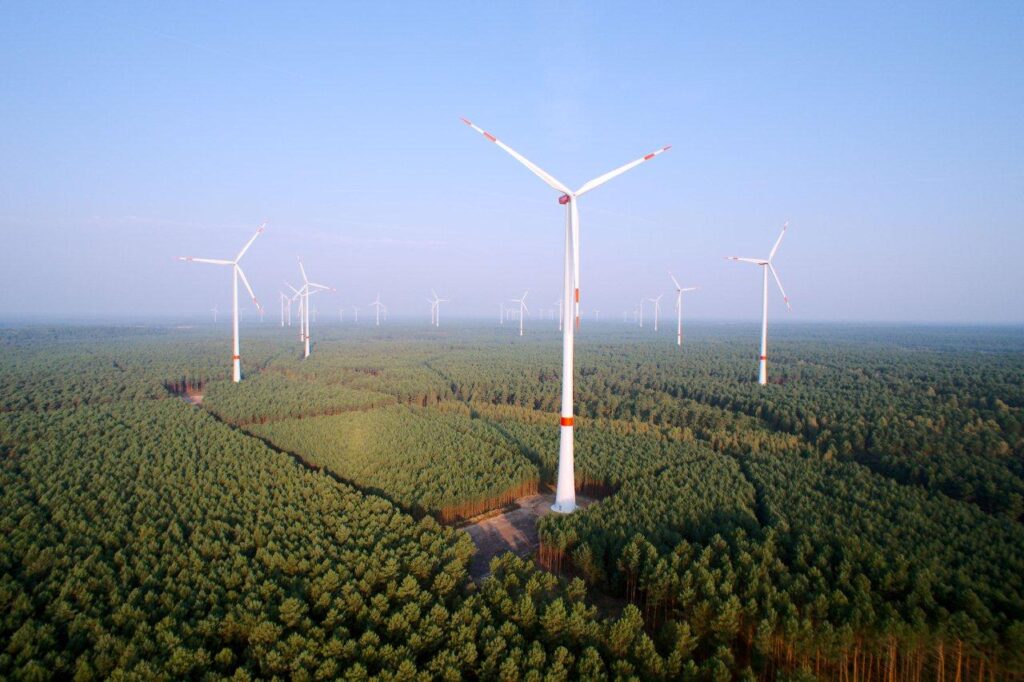
Renewable energy is expected to have accounted for 38% of all electricity consumed in Germany in 2018, up two percentage points on-year, according to a key industry group.
The country, however, is still set to miss its 65% by 2030 renewables goal if the current pace of project construction is left unchanged, the Federal Association of the Energy and Water Industry, or BDEW, said.
Extra tenders for offshore wind are needed “quickly”, along with more planning and investment certainty for onshore wind, for Germany to have a chance of reaching the target, it added.
“It is therefore all the more important that the promotion of wind power projects and urgently needed network expansion is now at the top of the energy policy agenda,” BDEW chairman Stefan Kapferer said.
The report was prepared by BDEW in conjunction with the non-profit Center for Solar Energy and Hydrogen Research Baden-Württemberg.
It also found that in the individual months of January, April and May this year, renewable energy accounted for 43% of national electricity consumption.
Onshore wind is set to remain as the strongest source of green power in 2018, contributing 94bn kilowatt hour (kWh). Biomass would be second, with 52bn kWh, and solar PV third, with 46bn kWh.
Offshore wind is set to come in fourth, with its contribution in 2018 estimated to rise 10% on-year to 19bn kWh.