


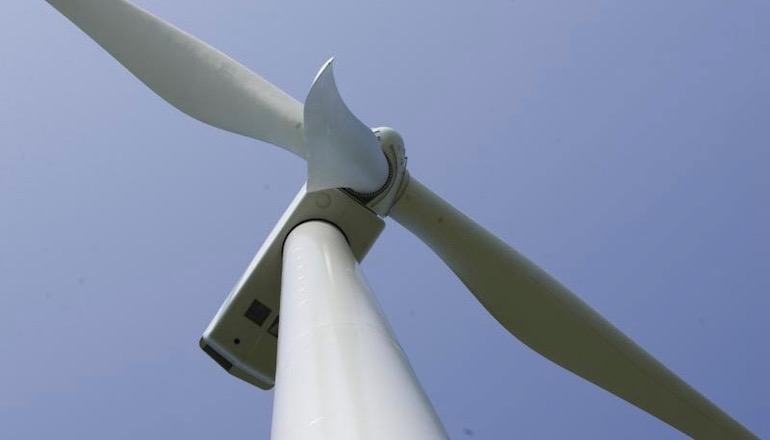
GE Renewable Energy has launched a new ground-based blade inspection system that could reduce operations and maintenance costs by about 25%.
The new approach combines thermal imaging technology and wide-band acoustic spectral analysis to detect anomalies on blades on GE and other manufacturers’ machines.
Data is delivered on a real-time basis and reduces the need for up-tower inspections, GE said.
It added that about 1500 turbines have been inspected using the technology, with individual inspections taking on average 15 minutes.
The system is installed at the base of a turbine to take a series of recordings of the blades as they are turning under an active load.
“This produces a real-time view of the subsurface health of a blade, layered with advanced digital image analytic capabilities that read and detect a wide range of anomalies,” GE said.
Some blade anomalies produce a distinct sound which the system detects and analyses to pinpoint the specific location of the problem, the company said.
A range of defects can detected, including fatigue cracks, fibre waves, delamination, bonding issues, breaking or missing adhesive joints, splits and defective repairs.
The system is currently available in North America but will be extended to other regions in the coming months, GE said.
GE digital services chief executive Anne McEntee said: “Wind turbine blade inspections have come a long way. Ground scopes, drones, and tap testing are just a few of the methods that operators have used to help prevent against failures both small and catastrophic.
“But most down-tower blade inspections are limited to showing what’s happening with the surface of a blade. Many of the issues that lead to larger failures are deeper within the blade itself.
“This is where our inspection technology truly excels. The ability to also look beyond the exterior coating of the blade, regardless of manufacturer, marks a significant advance in blade inspection technology for the entire wind industry.”