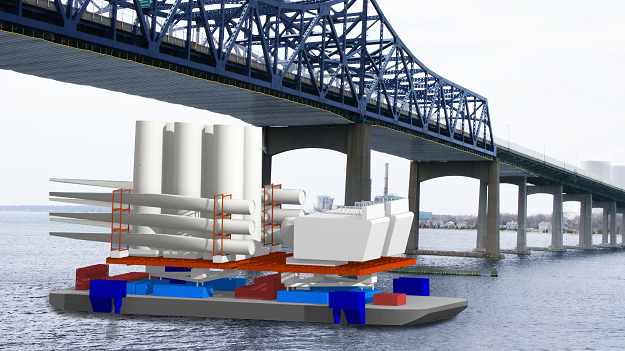
Dutch companies GustoMSC and Barge Master have joined forces to develop a so-called motion-compensated feeder solution to be used during installation of US offshore wind projects.
The duo will adopt an integrated approach in order to comply with the Jones Act and overcome the operational restrictions of US ports.
Barge Master’s motion-compensated platform BM-T700 will be placed on a US-flagged offshore vessel or a seagoing barge in order to deliver wind turbine components to be installed by a jack-up.
By compensating the motions of the vessel, the platform creates a stable lift-off base for a maximum weight of 700 tonnes, the company said.
GustoMSC will perform the naval engineering and the integration of the BM-T700 platform onto a new or existing DPII feeder barge.
GustoMSC said the technique is a “solid solution” for the first wave of US offshore projects.
“By offering this steady top feeder barge, GustoMSC and Barge Master offer the capability to overcome current hurdles and make the successful development of the first US offshore wind projects possible within time and budget constraints,” it added.
Image: Feeder solution concept (GustoMSC and Barge Master)
Dutch duo sails into US offshore
 By EBS