Dynamic HV cables, synthetic mooring lines and serial manufacturing processes are priority areas to boost floating offshore wind development, according to a new report from a Carbon Trust-led joint-industry initiative.
The Floating Wind Joint Industry Project (JIP) report outlines technology challenges and priority innovation needs for the sector in order to reach cost parity with other energy technologies.
The report summarises the main findings from the first phase of technical projects for the Floating Wind JIP and was launched today by Scotland’s Energy Minister Paul Wheelhouse at the All-Energy Conference in Glasgow.
A lack of dynamic HV cables to export power to shore was highlighted by work done by Petrofac. In response, the Carbon Trust has started a project to accelerate development of such cables.
Work by Ramboll into suitable mooring systems found lessons could be learned from the oil and gas sector, but added there is also a need for “dedicated solutions” for floating wind.
Synthetic mooring lines, if de-risked for long-term applications, offer potential cost savings compared with conventional steel chain or wire moorings, Ramboll said.
A further study is underway into optimal monitoring and inspection regimes for a floating wind farm.
The report also highlighted work by London Offshore Consultants (LOC) looking at the needs and methods to construct and operate a 500MW floating project.
LOC noted the importance of adopting serial manufacturing processes and need for further investigation into how to carry out major component repairs.
Wheelhouse said: “The findings in the report will be invaluable in helping us unlock the potential of floating wind technology for developing a sustainable energy future for Scotland and in developing expertise and technology to open up export opportunities in overseas markets.”
Carbon Trust offshore wind manager Rhodri James said: “This report aims to make the challenges faced more transparent to enable the supply chain to engage and help to find the necessary solutions.”
The Floating Wind JIP is a collaborative research and development initiative between the Carbon Trust, the Scottish government and 12 offshore wind developers.
The developers are EnBW, Engie, Eolfi, Eon, Iberdrola, Innogy, Kyuden Mirai Energy, Orsted, Shell, Statoil, Vattenfall and WPD.
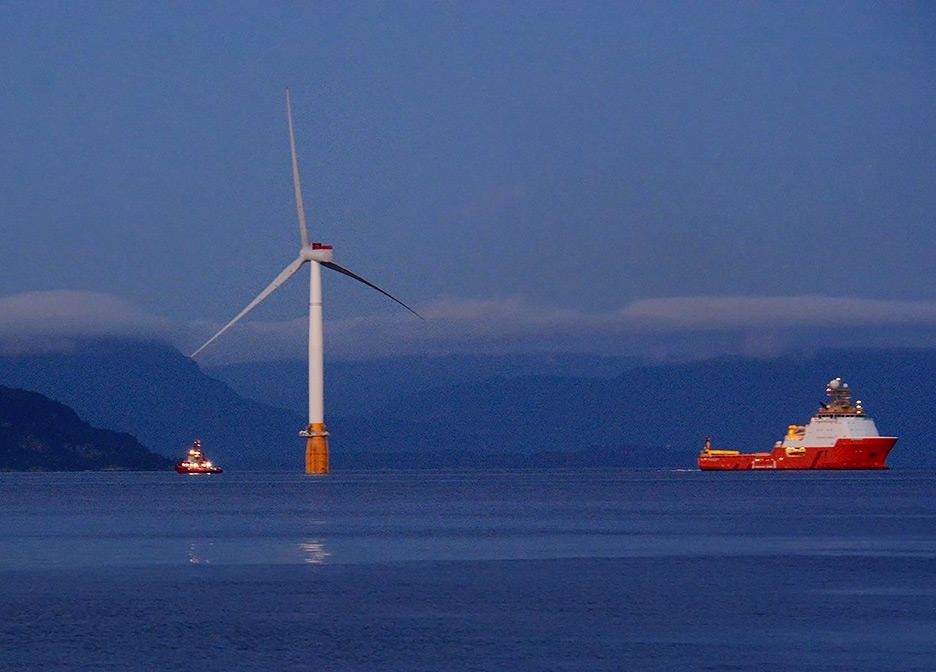
Image: the Hywind Scotland floating offshore wind farm (Statoil)
Industry spotlights floating needs
 By EBS