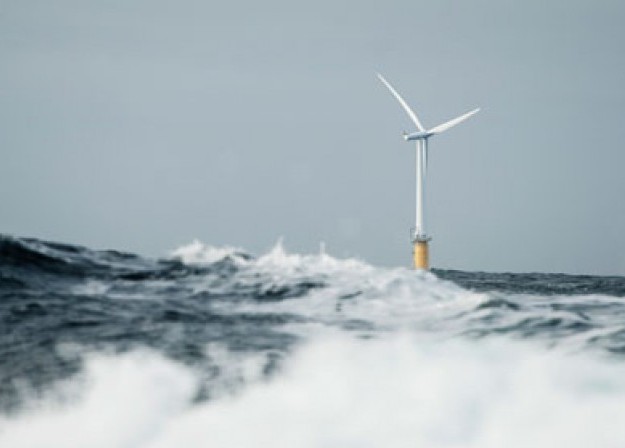
A supportive policy framework in the UK is critical for floating offshore wind to build on a “world leading position” that could see up 90MW installed by 2018, according to a new report by the Carbon Trust.
The report – ‘Floating wind joint industry project: policy and regulatory appraisal’ – outlines the key policy and regulatory conditions that are required to support commercialisation of floating wind.
A critical factor for the development of the sector is adequate grid connection given that most locations for floating wind are “far removed from demand centres”, it said.
Therefore, the regulatory framework should support continued grid investment, expansion and innovation.
On licensing and consenting, the Carbon Trust said current regimes are adequate but a “lack of proportionality can act as a barrier to small-scale demonstration projects”.
Greater clarity on consenting timelines would also help project developers and de-risk investment decisions, the report said.
It noted that financial backing for floating offshore wind could be improved by ring-fencing support through the Contract for Difference (CfD) mechanism or in the absence of CfD support through grants.
The Carbon Trust said the best way to boost the supply chain would be through the creation of a strong domestic market.
“However, in the absence of a suitable remuneration system for project build out, policy makers can continue to support UK companies to innovate and develop products and services which can be exported to active markets overseas,” the report said.
Increased coordination of supply chain activity across the UK and aligning decarbonisation and energy security goals with industrial strategy is also recommended.
The report was commissioned as part of a joint industry project supported by the Scottish government, Dong Energy, Eon, Eolfi, Innogy and Statoil.
Image: Statoil
Policy ‘critical’ to floaters future
Carbon Trust outlines conditions needed for commercialisation
 By EBS