Offshore wind energy sites off the coasts of Massachusetts and Rhode Island do not have high concentrations of protected whales, turtles and seabirds, according to two new surveys.
The surveys, which were carried out for the Bureau of Ocean Energy Management (BOEM) and the Massachusetts Clean Energy Center (MassCEC), collected data on whales and turtles between October 2011 and June 2015 and on birds from November 2011 and January 2015.
The New England Aquarium, which conducted the whale and turtle work, carried out 76 aerial surveys and more than 1000 days of underwater acoustic recording.
The researchers said they sighted 60 North Atlantic right whales, an endangered species, only during winter and spring.
Leatherback sea turtles were most highly concentrated south of Nantucket between May and November, the survey found.
The College of Staten Island recorded 25 species of seabirds from a total of 38 aerial surveys.
Two locations were identified as having larger than average aggregations of seabirds on a regular basis, but both so-called ‘hotspots’ were located outside the wind energy sites.
MassCEC and BOEM said the data could be used to “identify important habitat areas, guide siting decisions for future development and inform environmental permitting requirements and mitigation efforts, aimed at minimising effects from these activities to wildlife”.
BOEM director Abigail Ross Hopper said” “The survey results confirm that responsible commercial wind development activities in these [areas] will not adversely affect protected species populations.”
Massachusetts Energy and Environmental Affairs Secretary Matthew Beaton said: “These studies will streamline the permitting process for an emerging energy growth sector while protecting the environment.”
reNEWS will be at AWEA Offshore WINDPOWER 2016 Warwick, RI, 25-26 October. Come visit the team at booth 11 to learn how you can take advantage of our unrivalled business intelligence on offshore wind.
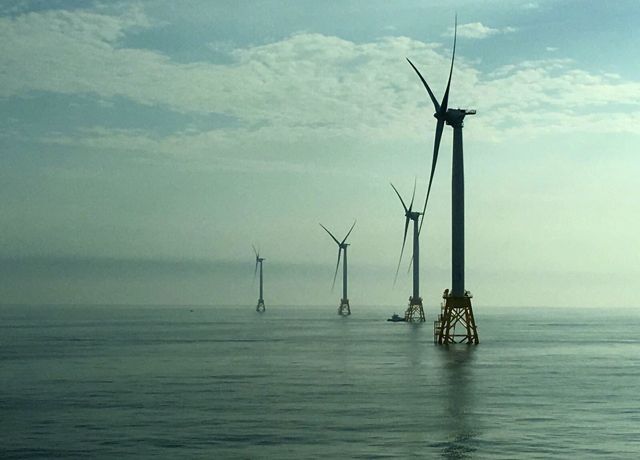
Image: Block Island offshore wind farm in the US (Deepwater Wind)
BOEM maps offshore protection
Government surveys find endangered species avoid east coast wind sites
 By EBS