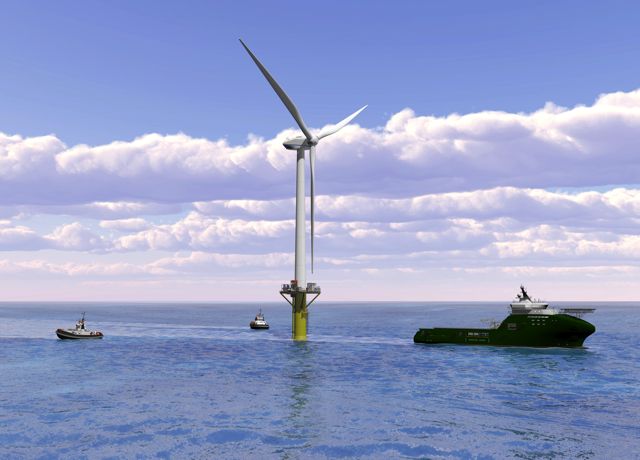
Wind-powered water injection oil recovery is feasible, capable of meeting targets and offers a cost-competitive alternative to conventional water injection solutions, a new project has found.
The DNV GL-led Win Win1 joint industry project has used floating wind turbines to power a water injection system in order to assess its technical and commercial feasibility.
Companies included in the project are ExxonMobil, ENI Norge, Nexen Petroleum UK, Statoil, VNG Norge, PG Flow Solutions and ORE Catapult.
The project compared the costs for wind powered water injection with a conventional alternative where water is injected via a flow line from the host platform.
It found that the Win Win technology has higher operational expenditures compared with a conventional alternative, but significantly lower capital expenditure means that it compares favourably over the long term.
DNV GL group president and chief executive officer Remi Eriksen said: “For the first time we can now see renewable energy as a large scale source of power to offshore oil & gas operations.”
DNV GL project sponsor and segment leader of floating wind turbines Johan Sandberg said: “To develop the concept further, a next step would be to test critical subsystems in a small scale physical set-up.
“The key objective would be to gain assurance that the components integrated in this configuration will offer satisfactory performance over time with a variable power input.”
The project partners are considering a second phase to the project.
Image: DNV GL
Win Win wind for oil & gas
Study finds wind-powered water injection is feasible for oil recovery
 By EBS