The German energy ministry is considering a longer transition period for the introduction of a “central” tendering model for offshore wind, similar to the one used in Denmark.
Under a draft amendment leaked to the German press, additional capacity for the period 2021 to 2024 will be put to two tenders among projects at advanced stages.
The first offshore wind auctions are scheduled for the end of next year, followed by onshore wind tenders starting in May 2017.
The amendment confirms an 11GW interim capacity target for offshore wind expansion in the North and Baltic Seas by 2025.
The target is meant as an upper limit. By the end of 2015, Germany had some 3GW of offshore wind in place. In 2020, a 7.2GW limit is scheduled, followed by a 15GW goal for 2030.
For onshore wind, the initial tendering volume will be 2.9GW per year, including repowering.
The tendering volume will later be determined annually by the expansion of other renewables, in order to reach a renewables share of 45% of power consumption by 2025.
A minimum tendering volume for onshore wind will be determined at a later stage.
Citizen-owned wind farm projects with up to six turbines and 18MW capacity will be granted some exemptions. They will, for example, be able to take part in a tender before they are granted a license.
The draft proposes for solar photovoltaic annual tenders of 500MW.
The draft bill is expected to be approved by Germany’s cabinet some time in the spring.
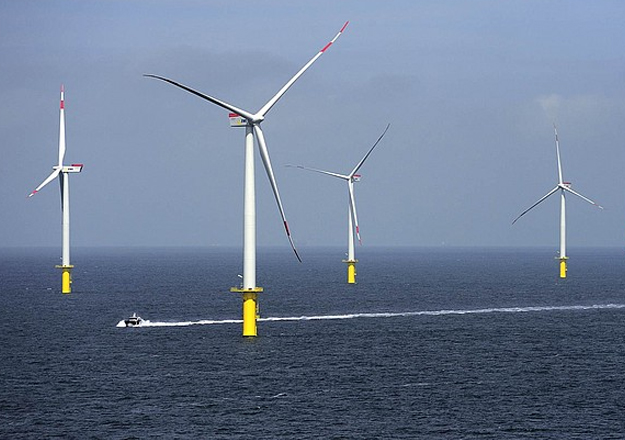
Image: Riffgat offshore wind farm in the German North Sea (EWE)
Germans revise tender plans
Extended transition period proposed before start of central tendering
 By EBS