


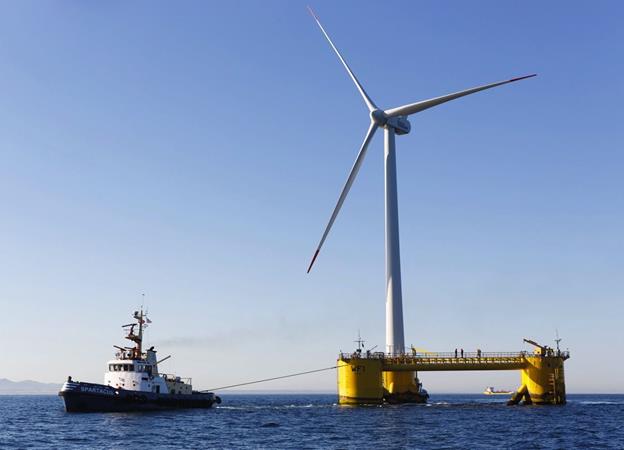
Floating wind farms are expected to account for 15GW of the global offshore capacity by 2030, according to Westwood Global Energy Group.
The UK data service provider is currently tracking over 121GW worth of projects in its offshore wind solution, WindLogix, and has found that the emerging technology will account for 4% of the total 2030 installed base with the other 96% firmly in fixed-bottom wind turbines.
Europe currently accounts for 66% of the global pipeline and will also account for 61% of 2030 installed capacity, with other regional markets such as Australia, Korea and the USA also expected to take off, the Aberdeen-based company said.
Although much of the outcome from licensing rounds such as Scotwind and other planned projects will be built post-2030, there is a good geographic spread longer term, it added.
Commercial scale projects are forecast to start coming online towards the end of the decade, with most of the floating wind pipeline operational from 2030 onwards, Westwood stated.
While not every region has shallow coastal waters, floating wind will allow for deployment in deeper waters in areas such as Southeast Asia where this factor would be a key driver, it added.
Westwood head of energy transition David Linden said one potential risk to the floating wind pipeline is the lack of developer experience.
Considering the large scale, 1GW+ floating projects that it tracks, the majority, 68%, is being proposed or led by developers that do not have offshore wind experience.
A further 21% have a fixed-bottom track record only and the remaining 11% is led by developers that have a floating wind track record.