


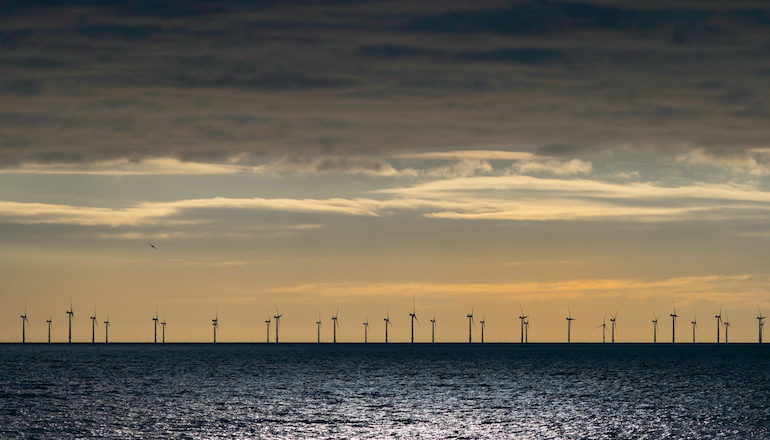
The County Administrative Board of Gotland is to recommend that the Swedish Government grant a permit in the country’s exclusive economic zone for OX2 and Ingka Investment’s 5500MW Aurora offshore wind farm.
If the Government gives approval, the first phase of the project could be operational by 2030 and deliver over 6TWh annually to South Sweden.
The entire wind farm is expected to be developed by 2035 and can deliver up to 24TWh on a yearly basis.
Aurora is located about 22 kilometres south of the island of Gotland and more than 30 kilometres east of the island of Öland in the Baltic Sea.
When completed the wind farm will produce up to 24 TWh annually.
The Baltic Sea is also an important area for the Swedish Armed Forces and with the help of sensors on the wind turbines, the wind farm could assist with surveillance in the area.
In connection with its decision, the County Administrative Board of Gotland also said that energy production is an urgent and important public interest and that the wind farm would provide a significant contribution of electricity production in the part of Sweden where consumption is greatest.
Emelie Zakrisson, head of offshore wind development in Sweden, OX2, said: “Aurora can act as an accelerator in the transition to net zero emissions in southern Sweden.
“The large-scale production of electricity will enable a substantial production of hydrogen and e-fuel, which is the prerequisite for fossil-free industry, shipping and aviation.
“We are working in parallel to secure the connections to the electricity grid as well as signing supplier agreements to be able to start construction as soon as all permits are in place.”
Frederik de Jong, head of renewable investments at Ingka Investments, said: “We are really pleased that the County Administrative Board has given the green light to the project.
“We look forward to realizing Aurora together with OX2.
“With a fast permit process the wind farm could be producing electricity by 2030.”
In addition to electricity production OX2 is working to improve biodiversity in the area.
Among other things OX2 is investigating how the fixed structures of the park can be designed to function as artificial reefs for sessile species and form premises where fish accumulate.
Collaborations are also underway to investigate the possibilities for large-scale mussel farming within the park, which would help reduce eutrophication.
In April this year the County Administrative Board granted Aurora a Natura 2000-permit.