


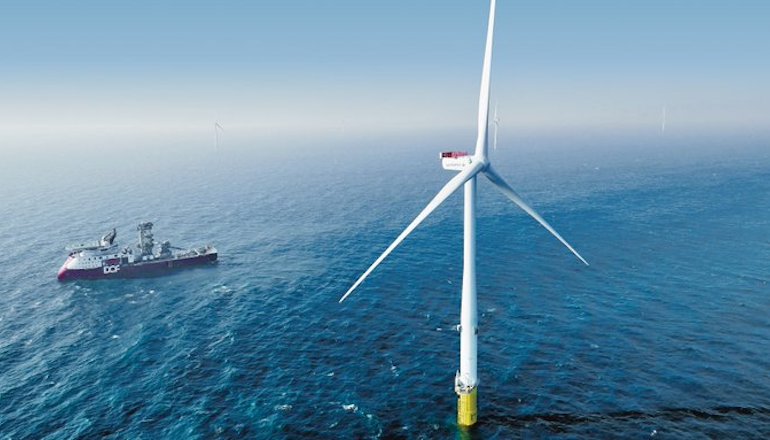
BEIS has granted development consent for Vattenfall’s 1800MW Norfolk Vanguard offshore wind farm off east England.
The decision by Energy Secretary Kwasi Kwarteng gives approval for the construction, operation and maintenance of up to 158 Siemens Gamesa turbines located approximately 47km off the Norfolk coast.
In his approval decision letter, Kwarteng cited that consent should be awarded given the “national need” for the project.
The letter added that the “Secretary of State has considered all the merits and disbenefits of the development…and concluded that, on balance, the substantial benefits…outweigh its negative impacts”.
The decision went against that of the examining authority, which “recommended that cumulative impacts on certain seabird species weigh against development consent being granted”.
The 592km-squared area will be situated alongside its 1.8GW Norfolk Boreas sister project, which was given consent by the Energy Minister in December last year.
Initial approval for Vanguard was quashed by the High Court last February after it ruled that the former UK energy secretary Alok Sharma had unlawfully failed to consider the cumulative impacts of a shared onshore substation when issuing his approval.
Speaking after today’s decision, Vattenfall UK country manager Danielle Lane said: ”Today is a major step forward for a project that will help to unlock the huge potential of offshore wind for the UK. We’re committed to making sure that these projects bring real, lasting benefit to the East of England – with jobs, supply chain and skills investment throughout construction and operation.
“We’ll be working even more closely now with local communities as we begin to take the project towards construction. This will include preparatory works on the ground, but also work with our local partners to make sure we get our plans absolutely right to maximise benefits to the region.”
After the court ruling, Kwarteng announced that he would look to re-determine Vanguard’s approval by way of a written representations process.
Vattenfall was required to provide updated information on cumulative impacts of the co-located substations for both Vanguard and Boreas as well as further details regarding wildlife compensation measures along the east coast of England.
Natural England and bird charity RSPB argued that the Swedish developer’s revised mitigation plans were still not feasible nor could they be delivered within an acceptable timescale.
Law firm Thrings, who represent Ray Pearce, the winner of the Vanguard’s legal challenge, also called for the appointment of an independent design review panel to address the in-combination impacts of the onshore substation in Necton.
Trade body RenewableUK (R-UK) said the decision will bring massive economic benefits to UK.
R-UK chief executive Dan McGrail said: “Today’s decision secures significant investment in much-needed new energy infrastructure at a time when we need to speed up the transition away from expensive fossil fuels to cheap domestic sources of clean energy.
“Building this major project will generate enormous economic benefits for East Anglia, creating high-quality jobs in our world-class offshore wind industry and the wider supply chain nationwide.
“To help the UK to reach net zero emissions as fast as possible, the government has set the industry a target of nearly quadrupling our current offshore wind capacity to 40GW by the end of this decade.
“Giving the go-ahead to a major project like Norfolk Vanguard is a big boost to help us to get there. It also demonstrates to the rest of the world that the UK is committed to taking significant practical action against climate change.”