


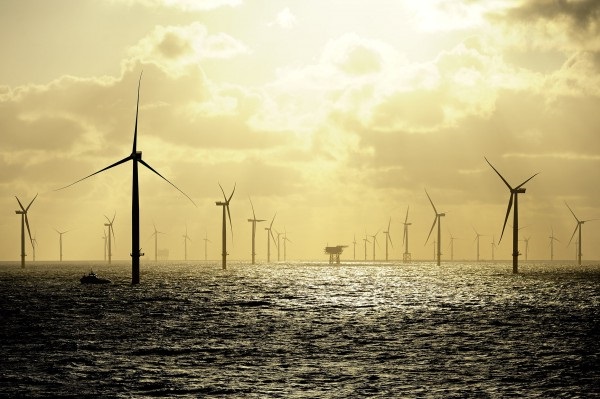
Orsted’s Borkum Riffgrund 1 has become the first German offshore wind farm to produce electricity that can be fed into the German power grid to stabilise the system.
Borkum Riffgrund 1 has shown, after successful completion of a prequalification specified by TenneT, that an offshore wind farm can provide minute reserve and secondary reserve to compensate for fluctuations.
Orsted has been working with Energy2market on the project.
Orsted Germany managing director Jorg Kubitza said: “Offshore wind power is in no way inferior to electricity from conventional power plants.
“The technology is also competitive in terms of costs and is also conquering the area that was previously reserved for conventional energy sources: the stabilisation of the power grid.
“That is why offshore wind power is part of the foundation of the energy transition in Germany, because it contributes to security of supply on many levels.”
In addition to TenneT, the prequalification concept of Energy2market on which the project is based, was also able to convince the other three German transmission system operators and has been released for all four control areas.
Energy2market managing director Raphael Hirtz said: “I am always particularly pleased when we succeed in opening up new attractive business areas for our customers and partners and at the same time making a sustainable contribution to the success of the energy transition.
“This is clearly the case with Borkum Riffgrund 1.
“The integration of our virtual power plant into the German balancing energy market now enables Orsted to market the potential of the offshore wind farm in a system-friendly manner.
“Borkum Riffgrund 1 shows the ability of renewables to compensate for the reduced flexibility in the overall system as a result of the phase-out of coal and nuclear power generation to a large extent on their own.”
TenneT chief operating officer Tim Meyerjurgens said the project represents an important step for the integration of wind turbines into the balancing power market.