


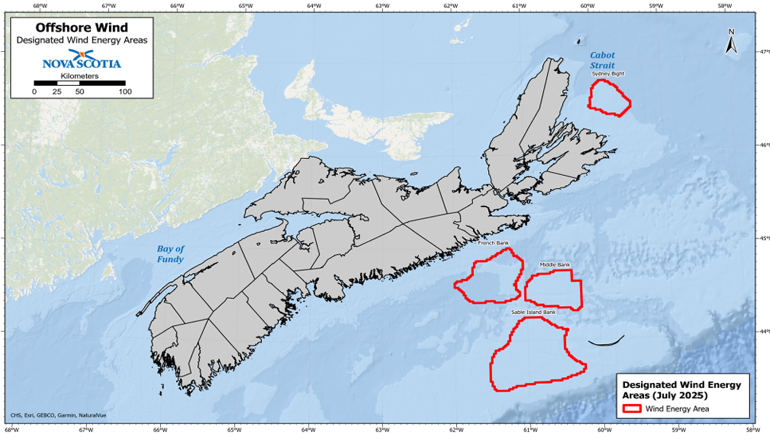
Canada has designated its first four offshore wind energy areas off Nova Scotia, advancing plans to license 5GW of capacity by 2030.
The federal and provincial governments selected French Bank, Middle Bank, Sable Island Bank and Sydney Bight for future offshore wind projects.
The announcement marks a key step toward launching a competitive bidding process later this year and is part of a wider effort to position Nova Scotia as a clean energy exporter.
Natural Resources Minister Tim Hodgson said: “The identification of wind energy areas off the coast of Nova Scotia is a significant step forward towards unlocking our renewable energy potential.”
Nova Scotia Premier Tim Houston added: “With some of the top wind speeds in the world, Nova Scotia has the potential to become a clean energy superpower.”
Energy Minister Trevor Boudreau said the decision to designate the areas sends “a clear signal” to industry that “it’s time to go, it’s time to get ready for the first call for bids, and it’s time to invest in Nova Scotia”.
The parcels were identified through a regional assessment that originally outlined eight sites with strong wind potential.
Following public consultation, the list was narrowed to five areas, of which four have now been officially designated, with Sydney Bight and French Bank made slightly smaller in response to stakeholder feedback.
The Canada-Nova Scotia Offshore Energy Regulator is now preparing recommendations on the upcoming offshore wind call and terms for seabed licensing.
Regulator CEO Christine Bonnell-Eisnor said the designation was “an important step in the offshore wind land tenure process”.
The federal and provincial governments jointly manage the offshore area under the Canada-Nova Scotia Accord Acts.
The province has also released the final module of its Offshore Wind Roadmap, covering consultation and engagement requirements for the sector.