


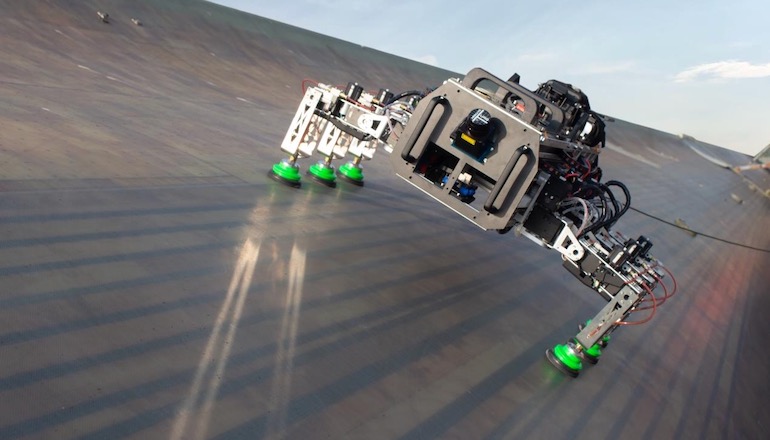
The Offshore Renewable Energy (ORE) Catapult and the National Robotarium have been confirmed as consortium partners for the delivery of the Offshore Low Touch Energy Robotics and Autonomous Systems (Olter) project, which is part of the Net Zero Technology Transition Programme (NZTTP).
The Olter project has been allocated £4.5m from the £16.5m Scottish Government Energy Transition Fund awarded to the Net Zero Technology Centre to accelerate a range of energy transition projects that will help deliver Scotland’s net-zero economy.
It is set to be delivered over 36 months and will be match-funded to £9.6m by industry.
The initiative will position Scotland as an international leader in the development, testing and delivery of robotics and autonomous systems (RAS) technologies to support the energy transition.
The funding will provide the test bed and environment necessary to develop RAS concepts and products.
Olter aims to galvanise industry support to facilitate the development of RAS in a more co-ordinated and integrated way across multiple industry sectors and ultimately lead the way for a RAS centre of excellence.
The Net Zero Technology Centre solution centre director Myrtle Dawes said: “The Olter project is a significant opportunity to build confidence and trust within industry for higher TRL RAS technology to increase their adoption.
“We are delighted to have agreed the consortium partners for the project which, with the support of industry, will play an important role in successfully driving the roll out of RAS technologies within the energy sector.
“NZTC has invested significant amounts in air, land and sea robotic projects to date and we are looking forward to further enabling their adoption in an industrial setting
ORE Catapult project development manager Dan Sumner said: “As we continue to work towards achieving Net Zero, it is clear that robotics and autonomous systems will be a vital enabler.
“Cutting-edge research and development into robotic technologies for the energy sector is already taking place, right here in the UK.
“We are building a position as a pioneer and expert in this field and the Olter project will help us to further hone our world-leading expertise.
“The opportunity this presents for Scotland and the UK is significant – across the supply chain we can create jobs, upskill our energy workforce, build export potential and add value to our economy.”
The National Robotarium, which supports a variety of sectors in developing, testing and applying robotics and AI solutions to industry challenges, is progressing research and technology developed by the Offshore Robotics for Certification of Assets (ORCA) Hub through Olter.
National Robotarium chief executive Stewart Miller said: “Established in 2017, the ORCA Hub has demonstrated both the potential and success of academia and industry collaboration in accelerating the adoption of RAS in offshore energy.
“ORCA’s achievements to date range from launching tech that can help humans and robots to speak the same language to autonomous drones that can inspect offshore turbines.
“The National Robotarium’s approach to working with industry is ideally suited to benefit the OLTER project.
“Our facilities will assist with joint working, experimentation, test, and validation which all help to demonstrate the significant benefits of RAS.
“We are looking forward to working with our partners and appreciate the investment by both the Scottish government and industry collaborators in this initiative.”