


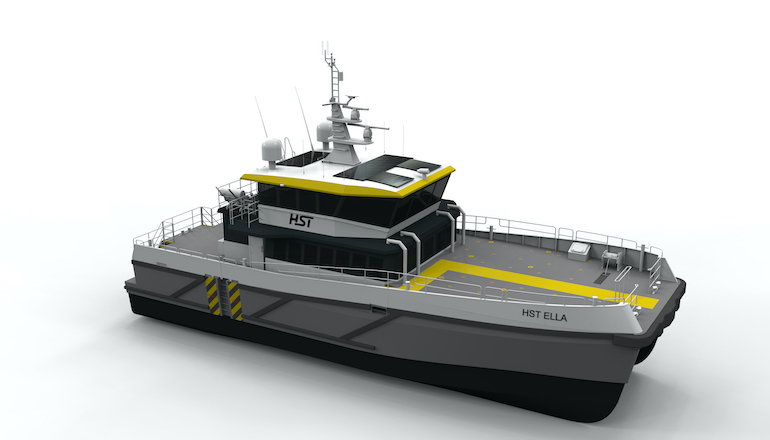
Chartwell Marine has signed a contract to design and deliver a new hybrid crew transfer vessel (CTV) for High Speed Transfers for work in the offshore wind sector.
The Chartwell 24 vessel is set to be built locally in the UK by Isle of Wight yard Diverse Marine, which was awarded the build contract following a competitive global tender process.
The vessel’s design is the product of extensive R&D and ongoing dialogue with HST and Diverse Marine, alongside wind farm owners and the wider offshore supply chain, Chartwell Marine said.
The catamaran’s hybrid propulsion system incorporates an electric motor alongside a diesel engine, which drive a high-performance changeable pitch propeller system.
At low speeds, the system allows for silent, zero emissions operation, enabling the vessel to comply with port air quality requirements, the company said.
The vessel design also has enhanced foredeck capacity and wheelhouse visibility.
Chartwell Marine managing director Andy Pagesaid: “We are excited to be working with HST and Diverse Marine to bring this innovative hybrid CTV to market, maintaining the collaborative approach that has fed into the evolution of the Chartwell 24 design to date.
“As the drive towards greener operations gains momentum, it is important that we tackle the emissions challenge head on, without losing sight of the key attributes that define effective offshore wind vessel support.”
HST chief executive Tom Nevin said: “As our partnerships grow throughout new markets, we need to continue investing in our fleet in order to address unique demands, opportunities and emerging requirements.
“With the addition of this highly capable hybrid vessel, we’re confident that we can continue supporting technical innovation in important areas like emissions reduction, while adding significant value for our customers.”
Diverse Marine director Ben Colman said: “The maritime supply chain in the UK continues to demonstrate its leading role bringing through the innovations that will define the way vessels are built and operated worldwide.
“It’s important that the economic opportunities inherent in commercialising and exporting these next-generation technologies are recognised as the UK and Europe look towards a ‘green recovery’.”