


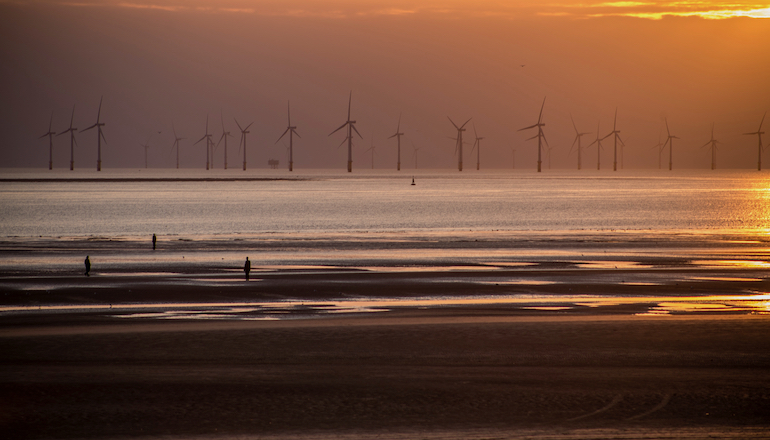
Copenhagen Infrastructure Partners (CIP) has partnered with NZ Super Fund to explore the potential for an up to 1GW offshore wind project in New Zealand’s South Taranaki Bight.
A newly established jointly held company will manage the feasibility study and development of the project.
CIP’s investment in the South Taranaki offshore wind project is part of a broader project development pipeline for CIP’s upcoming flagship fund CI V.
Project feasibility is being managed locally by Copenhagen Offshore Partners.
The feasibility work is expected to take approximately 24 months. Should the project proceed, and subject to relevant regulatory approvals, CIP and NZ Super Fund could deliver power by the end of the decade.
This project will be CIP’s first investment in Aotearoa New Zealand and follows the NZ$208m (€130m) commitment by NZ Super Fund to CIP’s new Energy Transition Fund (CI ETF I) last year.
Subject to feasibility, an initial planned 1GW development would represent over 11% of New Zealand’s current electricity demand capacity.
The partners believe the project could later expand to 2GW.
CIP and NZ Super Fund are in the early stages of project feasibility evaluation, which includes wind resource measurement, designing detailed environmental impact assessments with the support of local communities and experts, and examining industry potential and training needs for the Taranaki region.
The partners will also focus on measures to ensure any project can coexist with other uses of the marine area.
The success of offshore wind in South Taranaki will require active engagement and partnering with a wide variety of key stakeholders, including local iwi1, businesses and communities.
The partners have 1 ‘iwi’ are political and social groupings of Māori, New Zealand’s indigenous population had positive initial discussions and look forward to furthering the relationships with iwi and other stakeholders as early feasibility work continues.
CIP and NZ Super Fund have welcomed a recent announcement by Minister of Energy, Megan Woods, that Government would begin work on a new regulatory regime for offshore renewable energy in 2022.
CIP partner Michael Hannibal said Aotearoa New Zealand’s world-class offshore wind fundamentals – high average wind speeds and relatively shallow waters close to transmission infrastructure – makes the project an exciting development for CIP.
“There is a global shift to clean and sustainable energy sources. New Zealand has a prime opportunity to utilise its natural resources, in this case offshore wind, to power the country into the future.
“The New Zealand Government’s renewable energy ambitions will require strong partnerships to deliver large-scale clean energy projects over the coming decade.”