


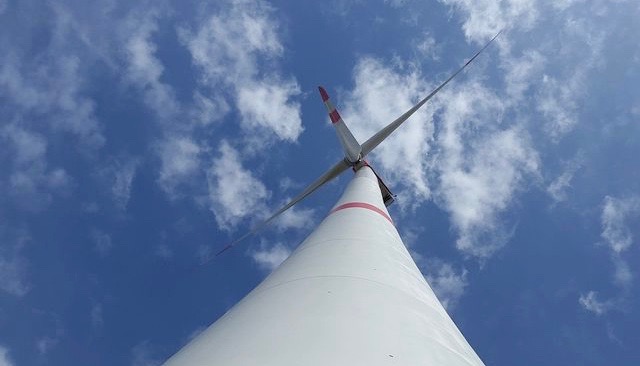
A cross-sector industry platform has published new strategies for the recycling of wind turbine blades.
In the report called ‘Accelerating Wind Turbine Blade Circularity’, WindEurope, the European Chemical Industry Council (Cefic) and the European Composites Industry Association (EuCIA) said that around 85–90% of wind turbines’ total mass can be recycled.
However, turbine blades represent a specific challenge because they are made from complex composite materials, the report said.
WindEurope chief executive Giles Dickson said: “The first generation of wind turbines are now starting to come to the end of their operational life. Many of them will be replaced by modern, more efficient turbines.
“We estimate that 14,000 wind turbine blades will be decommissioned in Europe by 2023. The recycling of these old blades is a top priority for us, as we are committed to the principles of a circular economy. Our collaboration with Cefic and EuCIA is key to scaling up the necessary recycling technologies and value chains.”
The report noted that there are various existing technologies to recycle wind turbine blades, but these solutions are not yet all available at industrial scale and economically competitive.
The study said that the main technology for recycling composite waste is through cement co-processing.
WindEurope, Cefic and EuCIA strongly support increasing and improving composite waste recycling through the development of alternative recycling technologies. This requires increased research and innovation funding, the group said.
The report continued: “At the same time, existing treatment routes such as cement co-processing must be deployed more widely to deal with the growing waste streams.
“The best strategy for wind turbine blades is one that combines design, testing, maintenance, upgrades, and the appropriate recycling technology to ensure the maximum value of the material is retrieved throughout its lifetime.
“This requires a better understanding of the environmental impacts associated with the choice of materials during design and with the different waste treatment methods at end-of-life.”
The report also highlighted that composite recycling is a “cross-sector challenge”.
The study called for active engagement from all the composite-using sectors and authorities in developing cost-effective solutions and strong European value chains.