


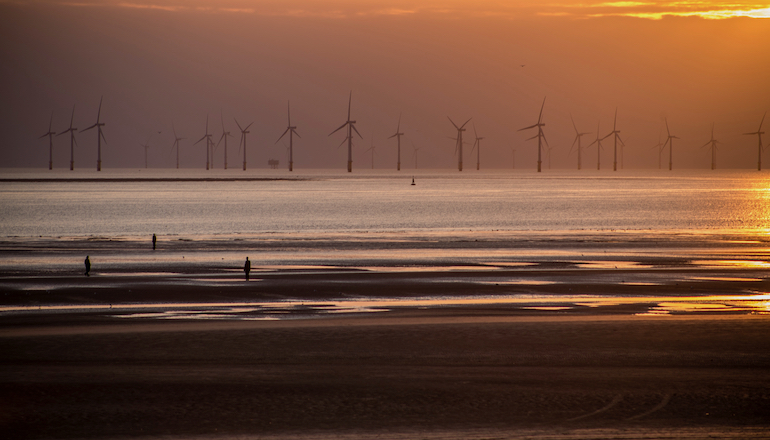
The Crown Estate is partnering with expert bodies to launch four research projects that will support nature recovery to underpin the coexistence of offshore wind farms with a thriving marine environment.
Subject to contracts, the Crown Estate will provide a total investment of £9m through the Offshore Wind Evidence and Change (OWEC) programme, which it co-leads alongside the Department of Energy Security and Net Zero (DESNZ) and the Department for Environment, Food and Rural Affairs (Defra).
The projects aim to fill critical evidence gaps around how seabirds interact with offshore windfarms and how strategic compensation measures could support seabird colonies, habitat restoration and creation.
Led by the Offshore Wind Industry Council (OWIC), the Carbon Trust, the Joint Nature Conservation Committee (JNCC), and Natural England, they will be delivered and supported by many other public, private and charitable organisations and are due to begin work over the coming months.
Together with other projects funded by the OWEC programme, they will improve understanding of the impact offshore wind has on marine wildlife around the UK, with the aim of ensuring ongoing development can provide long term biodiversity gain while helping to deliver on net zero commitments.
Gus Jaspert, Managing Director of Marine at The Crown Estate, said: “More demands are being placed on the seabed than ever before.
“It is a key component of the UK’s renewable energy system, a route to energy security and home to a thriving marine environment.
“To enable these multiple priorities to prosper in a sustainable way, we’re continuing to invest and work closely with the brightest and best minds to fill critical knowledge gaps, in turn helping to de-risk and accelerate nature-positive offshore wind development.”
One of the projects will develop a coordinated approach for reducing uncertainty surrounding bird collision risk and influencing factors, and therefore reducing consenting risk, at offshore wind farms.
Bethany White, Project Manager of the PrediCtOr project, at the Carbon Trust said: “Recent bird collision monitoring campaigns in offshore wind farms have shown very low numbers of collisions. However, this isn’t reflected in estimates derived from collision risk modelling, which are used to inform consenting decisions.
“A more robust evidence base is needed to address the remaining uncertainties.
“This requires a harmonised and co-ordinated approach that allows the industry to increase the accuracy of collision risk estimates.
“We are excited to be collaborating with our research partners British Trust for Ornithology (BTO) and Waardenburg Ecology on the PrediCtOr project, alongside a wide range of other leading industry experts.”