


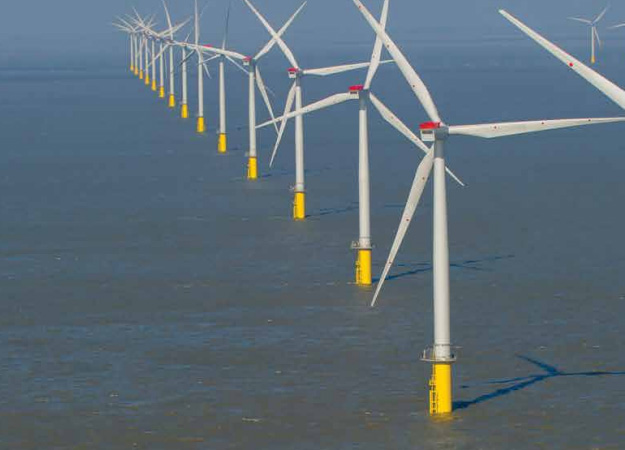
The Crown Estate has identified five broad ‘areas of search’ for the development of 4GW of floating offshore wind in the Celtic Sea.
The areas have been identified following technical analysis and extensive engagement between The Crown Estate, the UK and Welsh governments and key agencies, and specialist stakeholders.
Further stakeholder and market feedback will be used to refine the areas of search into smaller project development areas, within which the first generation of commercial-scale floating wind farms could be built.
The project development areas will be offered to the market via competitive tender, to be launched in mid-2023.
A detailed map has been published alongside the draft site selection methodology.
The proposed tender approach will draw on experience of earlier leasing rounds to accelerate development timelines and reduce risk to developers, for example by bringing forward the plan-level Habitats Regulations Assessment (HRA) ahead of market tender and initiating offshore survey work.
Alongside this announcement, the HRA will commence based on the areas of search. It will assess the potential impacts of these leasing plans on valuable habitats that make up the UK national site network of environmentally designated sites.
The areas of search take account of a variety of factors, including navigation routes, fisheries activity and environmental sensitivities, The Crown Estate said.
“By balancing these and other factors, and incorporating feedback from stakeholders, the Areas of Search have been assessed as the most favourable locations for floating offshore wind and those most likely to be deliverable in the near term, accelerating secure domestic energy,” it added.
The Crown Estate will continue to invite views from a range of specialist partners on key topics over the coming months.
Subject to the outcome of the plan-level HRA, The Crown Estate will in 2023 also confirm seabed rights for three separate ‘Test and Demonstration’ sites in the Celtic Sea.
Experience from these smaller-scale developments will inform the rollout of larger projects in the Celtic Sea and elsewhere, it said.
The Crown Estate head of new ventures marine Nicola Clay said: “The focus in our current programme on delivering the proposed 4GW of floating wind power represents a phased approach, which will provide important lessons at each stage to support and enable the future growth of the sector.
“It gives visibility to a long-term pipeline that will support investment in the regional supply chain and infrastructure, contribute significantly to UK energy security, and help projects in the Celtic Sea reach a scale where they can become more cost-competitive.
“As we look to refine the areas of search and progress the Habitats Regulations Assessment, we will continue to collaborate with government and other key stakeholders to hasten delivery and create lasting social, economic, and environmental prosperity for the nation.”
The Crown Estate managing director marine Huub den Rooijen said: “The Celtic Sea has the potential to become one of the great renewable energy basins of the world, bringing economic growth and abundant clean power.
“This leasing round is a first step, and we need to work together to bring technology costs down, deliver environmentally sound solutions, and respect the needs of the many other users of the marine space.”
Energy and Climate Change Minister Greg Hands said: “We already have the largest offshore wind deployment in Europe. Floating technology is key to unlocking the full potential of our coastline.
“We want to deliver up to 5GW of floating offshore wind by 2030. These projects can help power millions of homes with clean, and cheaper, renewable energy, reducing reliance on expensive fossil fuels.”
Welsh Minister for Climate Change Julie James said: “Our support for emerging technologies and innovation, including offshore marine energy, sit at the heart of our Programme for Government.
“In the short term, we believe offshore wind will provide fantastic economic and social regeneration opportunities.
“Work to date suggests that up to 1400 full time equivalent jobs could be sustained by 500MW of floating offshore wind projects.
“To unlock additional high value employment opportunities we need additional investment in Welsh ports infrastructure and our manufacturing base to offer an end-to-end solution for developers.
“We have been working with the port operators and industry to encourage strategic collaborations that maximise opportunities available to our economy.
“By setting out their evidence on the long term potential of the Celtic Sea, The Crown Estate has provided a greater level of certainty for investors.
“We have extremely high ambitions and will continue to work with The Crown Estate and the UK Government to ensure economic benefits for Wales continue to flow from this exciting and vital sector.”