


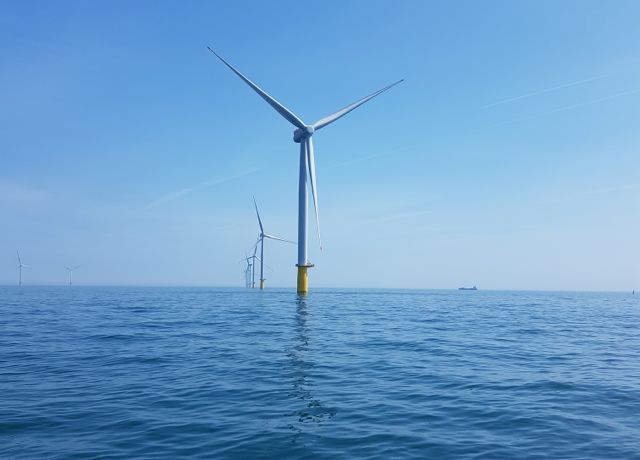
DNV is conducting due diligence checks to enable the financing of 13GW of offshore wind projects, comprising eight schemes on the US Atlantic coast.
The move follows news from the international accredited registrar and classification society’s Energy Transition Outlook 2024 report, which forecasts about 10GW of fixed offshore wind is set to be installed in the country between 2040 and 2050.
While the industry has seen headwinds recently, and the latest Energy Transition Outlook has tempered its overall forecast for offshore wind, projects are still moving steadily forward, as reflected by the robust financing activity in the US.
The offshore wind projects DNV is assessing collectively represent 13GW of clean energy capacity, which would increase the US’s total wind power capacity by nearly 9% if they become operational.
The technical due diligence the registrar headquartered in Høvik, Norway, is providing to the financial stakeholders for these offshore wind projects is grounded in sound engineering judgement which is very important for developers, lenders and investors, it said.
It added the methodology is an evolution of the company’s proven approach that has enabled on-time financing for thousands of onshore wind, solar, transmission and battery energy storage projects in the US and Canada.
DNV said it has also established local, in-house expertise around the intricacies of US project finance and the structures that have emerged since the passage of the Inflation Reduction Act (IRA), such as transferability.
Many stakeholders in the country’s offshore wind industry are headquartered in Europe and rely upon DNV for its on-the-ground knowledge of the US financing landscape, it said.
DNV is providing pre-commitment and construction monitoring due diligence for the eight offshore wind projects to ensure all stakeholders understand the risks of the project prior to final investment decision and further capitalize on tax credit monetization opportunities from the IRA.
These services are delivered within established financing mechanisms and processes to ensure on-time closing, it added.
“So far, three of the eight offshore wind projects we’re involved with have reached a final investment decision and the balance is making rapid progress towards this milestone. Our customers are now getting steel in the water and creating benefits for local communities,” said region president for energy systems North America Richard S Barnes.
“We’ve learned that the offshore wind projects getting financed and moving into the development and construction stages are the ones where developers can hit narrow installation windows because they’ve identified and mitigated risks around vessel availability, supply chain, and evolving regulatory requirements.”
DNV’s US-based offshore wind team enabled clients to succeed in California’s 2022 offshore auction, providing in-depth assessments of the technical, societal, and environmental risks around offshore wind development in Oregon and Maine, and are addressing barriers on behalf of the industry to accelerate the deployment of high voltage direct current technology.
This regional team is backed up by a global team that has assessed 50GW of offshore wind energy.
“DNV uses our advisory expertise to help offshore wind projects increase performance and minimize risks,” said Barnes.
“Success relies on understanding the dependencies between different parts of the offshore wind value chain – this is why we take a full lifecycle approach to managing risks and reducing costs.”