


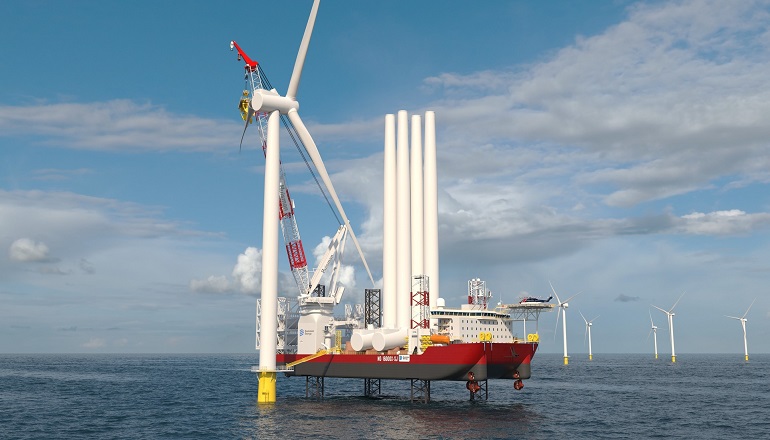
Dominion Energy has launched the United States’ first Jones Act-compliant offshore wind turbine installation vessel, from land to water.
The event marks a major milestone in the construction of the vessel, Charybdis, and it involved the welding of the ship’s hull and commissioning of the vessel’s four legs and related jacking system.
“Charybdis is vital not only to CVOW, but also to the growth of the offshore wind industry along the US east coast and is key to the continued development of a domestic supply chain by providing a homegrown solution for the installation of offshore wind turbines,” said Bob Blue, Dominion Energy’s chair, president and chief executive officer.
The 472-foot vessel is being constructed at the Brownsville, Texas shipyard of global marine and offshore engineering group Seatrium, using domestically sourced steel.
At peak construction, over 1200 workers were employed on this project.
Once complete, the home port for the vessel will be in Hampton Roads, an offshore wind installation harbour in Virginia and it will use an American crew.
“Seatrium’s AmFELS shipyard has partnered with Dominion Energy in this ground-breaking project to supply the first US Jones Act-compliant WTIV, Charybdis, playing a critical role in the country’s energy transition.
“The US-built vessel will not only contribute towards reliable, affordable and clean energy, but also benefit local communities in creating a significant local knowhow and job opportunities, paving the way for future growth in the US offshore wind industry,” said Chris Ong, Seatrium’s chief executive officer.
The vessel’s hull and infrastructure was fabricated with more than 14,000 tons of domestic steel, with nearly 10,000 tons sourced from Alabama, West Virginia and North Carolina suppliers.
The vessel is designed to handle turbine sizes of 12MW or larger.
The vessel launch marked a historical achievement as one of the world’s largest completed lifts, totalling 23,000 tons.
Also announced today, the CVOW project received a final construction air permit from the Environmental Protection Agency, so that offshore monopile installation can begin in May.