


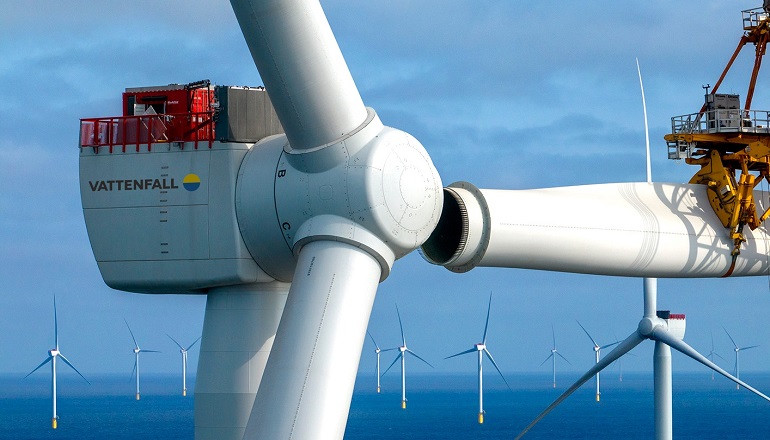
The Dutch government has amended the permit for the 2GW IJmuiden Ver Beta offshore wind farm to allow half of the capacity to be built in 2032.
The scheme, awarded in June 2024 to Zeevonk, a joint venture between Vattenfall and Copenhagen Infrastructure Partners, was originally due for full completion by the end of 2029 alongside a 1GW electrolyser at Maasvlakte and a 50MWp offshore solar array.
Minister for climate and green growth Sophie Hermans stated in a letter to cabinet that the delay to the Delta Rhine Corridor hydrogen pipeline to 2032 meant the project was no longer financially viable under its original terms.
The pipeline is designed to transport green hydrogen from Maasvlakte to customers in the Netherlands, Belgium and Germany, but without it, Zeevonk would face a limited market and major revenue shortfalls.
Under the revised consent, 1GW will still be delivered in 2029, with the second 1GW to follow in 2032, broadly matching the new pipeline completion date. The change will count half of the project towards the Netherlands’ 2030 climate target, while avoiding a complete permit re-tender.
The minimum mandatory system integration capacity, such as electrolysers, has been reduced to 500MW, with commissioning scheduled for 2033 when the Delta Rhine Corridor is operational.
Zeevonk’s total permit payment has been cut from €800m to €400m. The developer will pay €20m annually for the first two years, pause payments for several years, then increase instalments after the wind farm is commissioned, with the highest amounts due in the final years of the 40-year term, according to Hermans.
The offshore solar requirement has been amended to an “innovative” 6MWp pilot by 2028, with expansion to 50MWp if technically and financially viable. This smaller project is due earlier than under the original permit.
The government said the phasing would have “considerable financial consequences” for grid operator TenneT, which has contracts in place for the 21GW offshore wind roadmap and will now need new agreements for the delayed capacity. These additional costs, if approved by regulator ACM, will be recovered through network tariffs.
Hermans said the changes followed extensive discussions with Zeevonk and an independent review by KPMG, which found the amendments reasonable and not overcompensating the developer for the Delta Rhine Corridor delay.
Without the revised terms, Hermans said Zeevonk would likely have been unable to build the project, triggering a permit revocation, a lengthy re-tender process and the loss of almost the entire financial bid.
She added that in the current market, interest from other developers would be limited, risking greater delays and higher costs to the state and TenneT.