


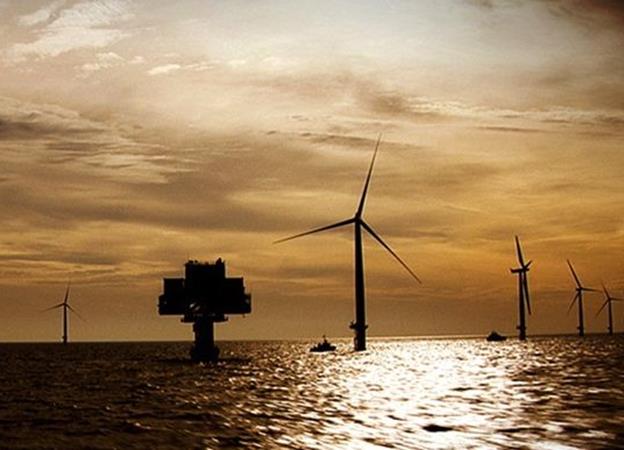
Elia Transmission Belgium’s Modular Offshore Grid (MOG), the first power hub in the North Sea, has marked five years of operation.
In that time the MOG has transported more than 14.75TWh of carbon-free electricity to Belgium and boasts an “impressive” availability rate of 99.998% in 2020 and 100% in the other years.
Located 40km off the coast of Zeebrugge, the platform brings together the electricity generated by four offshore wind farms (Rentel, Seastar, Mermaid and Northwester 2) at a single point to send it to the mainland more efficiently and securely.
Around 456 offshore operations have been carried out at the MOG since 2020.
The MOG is one of Elia Transmission Belgium’s first offshore projects and has enabled our company to gain “unique and internationally recognised” experience in this field.
The five-year milestone was market in the presence of King Philippe of Belgium.
The electricity is not transformed on the platform; rather, it is pooled there before being sent to the Stevin high-voltage substation in Zeebrugge.
Before the MOG was commissioned, each wind farm was connected directly to the coast.
This platform provides a more secure and efficient way to transport energy to the mainland, because grouping together the cables from four wind farms makes it possible to pool infrastructure and use around 40km less cable.
MOG offers greater security of supply: should one of the cables fail, the meshed system allows the others to take over, so optimum capacity of the four wind farms isn’t sacrificed (albeit with limitations in the event of strong winds).
The 300MW Rentel wind farm was the first to be integrated into the MOG in September 2019.
It was joined by Northwester 2 (250MW) in October 2019, followed by the SeaMade (Mermaid and Seastar) wind farms (500MW) in April 2020.
In total, around 1GW can be generated by these wind farms and sent to the mainland via the MOG.
This represents almost half of the maximum amount (2.1GW) that can be generated by this first offshore zone.
The future Princess Elisabeth offshore generation zone will provide Belgium with up to a further 3.5GW of offshore electricity.
On 9 January 2024, one of the MOG cables linking the Rentel platform to the mainland failed following an incident.
Some 400 metres of the damaged cable had to be replaced, which took several months.
During the highly complex repairs, the alternative transmission route via the OSY platform “worked perfectly”, enabling the wind farms to continue generating electricity despite the broken cable.
On 18 February 2022, Belgium was hit by Storm Eunice, with force 10 winds on land and force 11 at sea.
The winds, which at times reached speeds of over 140km/h at sea, disrupted shipping in the area.
These extreme conditions caused two vessels in distress to leave their navigation zone.
One of them came dangerously close to the offshore turbines and the authorities had to activate the General Emergency and Intervention Plan (GEIP) North Sea.
Elia was asked to join the crisis team to share real-time video footage of the situation taken by the MOG’s surveillance cameras, aiding the authorities in their decision-making.
The vessels were ultimately able to sail safely out of the offshore wind zone.
“Thanks to strict safety protocols, thorough maintenance planning and continuous monitoring, the platform has been able to operate for five years without any significant incidents,” said Elia Transmission Belgium’s head of assets offshore Geert Moerkerke.
“Alongside our offshore team, we are now mainly looking ahead to the commissioning of Princess Elisabeth Island and the further development of our activities,” he added.