


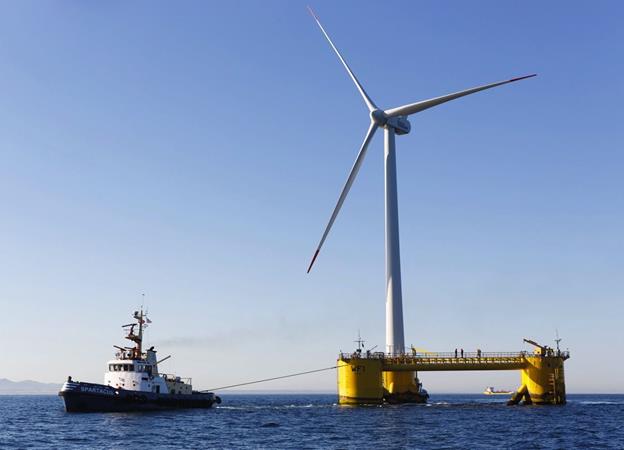
Floating offshore wind farms could help Oregon achieve its clean energy goals but will face challenges ahead of its potential deployment off the state’s coast, according to a report by the Oregon Department of Energy (ODOE).
The study, which was directed by Oregon Legislature, outlines the benefits and challenges of integrating up to 3GW of floating offshore wind into Oregon’s grid by 2030.
It found that floating offshore wind could bring compelling benefits to the state, including helping Oregon achieve its clean energy goals, strengthening grid reliability and resilience, and bolstering economic development in coastal communities, among others.
It also acknowledges significant challenges, including concerns about the effects potential offshore wind development could have on coastal communities, the environment, natural and cultural resources, and existing coastal industries like fishing, recreation, and tourism; technology, transmission system, and port infrastructure readiness; and complex siting and permitting challenges.
The report provides a summary of information and key findings from a review of existing literature; consultation with other state, regional, and national experts; and thoughtful feedback from Oregon stakeholders over the past year.
While this input provided a strong foundation for ODOE’s study, it also made clear there is a need for further study, engagement, and collaboration to more fully understand how floating offshore wind could affect the state, the ODOE said.
In particular, stakeholders urged additional regional and local collaboration to find a balance between the benefits and challenges of deploying this technology, it added.
ODOE director Janine Benner said: “Like all energy technologies, floating offshore wind development would carry important tradeoffs for Oregon.
“We hope our study provides policy and decisionmakers with helpful background and expert analysis as they continue conversations around how floating offshore wind could help Oregon reach our clean energy and climate goals.”