


Floating offshore wind has the potential to generate up to 17,000 jobs in the UK by 2050, according to a report from the Offshore Renewable Energy Catapult.
The report, which was commissioned by Crown Estate Scotland, said the sector could add 10GW of capacity by mid-century and generate up to £33.6bn of gross value added.
It said that the global potential for floating offshore wind – 55GW by 2050 – also offers an annual export value to the UK of at least £230m by 2031 and £550m by 2050 with appropriate support.
“The UK now has a short window of opportunity to capitalise on its early advantage and realise the long-term benefits,” the report said.
Policy support is essential to provide the private sector with the confidence to invest, it added.
This should include ring-fenced funding for floating wind in future Contracts for Difference auctions for at least 100MW of pre-commercial projects by 2025 at a cost of £668m and 800MW of commercial-scale by at least 2027 at a cost of £1.2bn.
ORE Catapult added that infrastructure investment of £800m will also be needed, including port and fabrication facilities.
“There is clear appetite within the UK for private sector investment, but it does require public co-investment, estimated in the region of £350m,” the report added.
Scottish Renewables policy manager Stephanie Conesa said: “Floating wind provides an enormous economic opportunity for Scotland and its development, as well as that of other earlier-stage technologies, has the potential to provide renewable electricity in locations where other renewable energy devices cannot be deployed.”
Crown Estate Scotland senior development manager Sian Wilson said: “At a time when the need to tackle climate change has never been greater or starker, and policy support for innovation, industrialisation and regeneration of high quality jobs is increasing, the floating wind opportunity ticks all the boxes.
“Thousands of UK jobs, global exports and clean and secure energy generation are all up for grabs – if the right government support is in place.”
ORE Catapult head of insights and author of the report Gavin Smart said: “Offshore wind will play a significant role in the UK in maximising the economic and industrial benefits of renewable energy generation. However, to reach anything like its full potential will require a significant contribution from floating wind.
“A key part of this study has been industry engagement in formulating and testing assumptions. This has highlighted the strengths of the UK supply chain to serve the domestic and export markets, leveraging heavily from a proven track record in offshore wind and oil and gas.
“With an increasing focus on carbon emissions reductions globally, and the suitability of floating wind technologies to a wide range of water depths and seabed conditions, the UK is well-placed to capitalise on the export opportunities in this growing global market.”
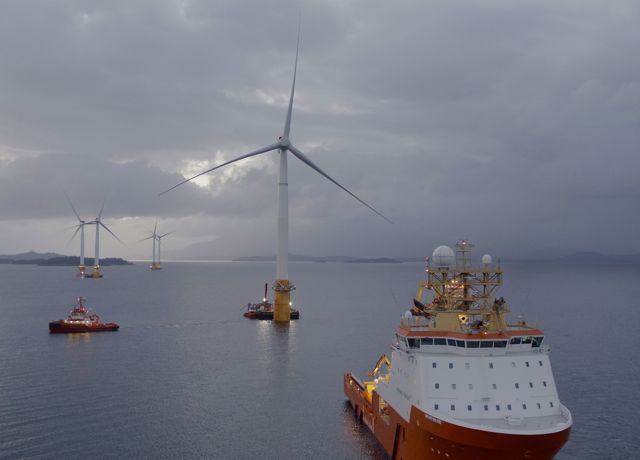
The UK has early-mover advantage in floating offshore wind with projects such as Equinor and Masdar’s 30MW Hywind Scotland (pictured) facility, the report said.