


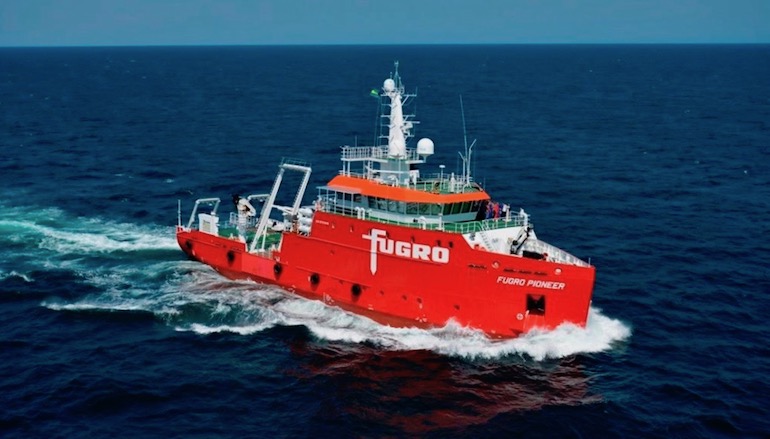
Fugro has reported a sharp fall in third quarter 2025 EBITDA due to ongoing weakness in offshore wind and delays to oil and gas projects.
EBITDA fell to €108.6m in Q3, compared with €140.3m a year earlier, according to the company.
Revenue declined to €504.7m from €596.5m, while EBIT dropped to €64.9m from €99.3m.
Fugro said the performance marked an improvement on previous quarters but cautioned that the current quarter will be “materially affected” by project descopings and postponements.
Mark Heine, CEO, said: “The year 2025 is proving to be challenging, especially for our early-stage site characterisation activities.”
He added: “In September, following significant shifts in market conditions, we regrettably had to withdraw our full-year revenue and margin guidance.”
Heine said: “The third quarter performance showed the anticipated notable improvement compared to the previous quarters.”
He continued: “However, the fourth quarter is expected to be significantly impacted by the continued deterioration in the offshore wind market, and by the temporary intensification of energy companies’ disciplined cash and cost management in response to lower oil prices.”
Fugro reported operating cash flow before working capital changes of €95.4m in Q3, down from €123.6m last year, and free cash flow of €25.6m, down from €102.6m.
The 12-month backlog decreased to €1.43bn from €1.69bn year-on-year.
Fugro has increased its cost-reduction target to 1,050 full-time roles and €100m-€120m in annualised savings, with most cuts to complete by year-end.
Heine said: “It is too early to provide an outlook for 2026.”
He said: “As the offshore wind market is expected to remain volatile, we continue to take action as appropriate.”
He added: “Our balance sheet remains robust, and we are committed to protecting it by prioritising cash flow preservation.”
Fugro highlighted project work including ENI’s deepwater gas fields in Indonesia and site characterisation for RWE’s and TotalEnergies’ Windbostel projects.
The company is also scaling back capex in response to the lower-growth environment.