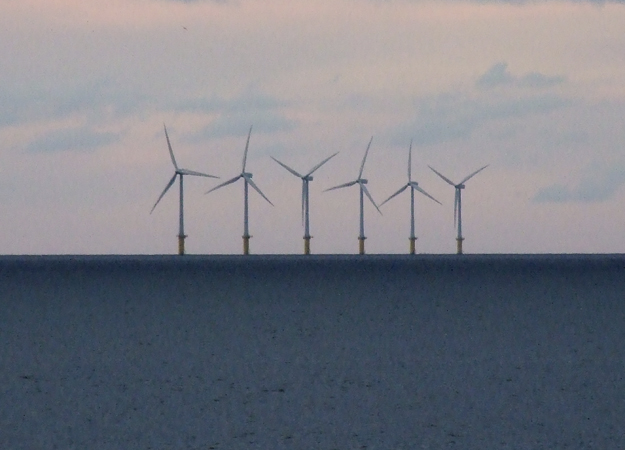
Germany plans to restrict all new offshore wind capacity installed in 2021 to the Baltic Sea, according to an agreement between the economics ministry and government parties.
A total of 500MW of grid capacity will be made available that year but only in the Baltic Sea, as power lines on the mainland are more advanced in the eastern part of Germany than in Lower Saxony along the North Sea coastline.
Half of the 500MW of new offshore wind foreseen for 2022 could be built in the Baltic Sea.
No geographical restrictions are given for the annual 700MW expected between 2023 and 2025.
As a consequence of the shake-up, offshore wind installations until 2025 will drop to 3.1GW, followed by 840MW a year from 2026.
The 15GW target for offshore wind capacity by 2030 remains unchanged.
The transitional period reserved for projects that already hold a licence or are in an advanced planning stage will be expanded by one year to include 2025.
Tenders for existing offshore projects will also be extended, with 1.7 GW auctioned in 2017 and 1.4GW in 2018. This compares to two 1.46GW tenders in 2017 foreseen in earlier drafts.
In addition, the so-called “central model” will be introduced in 2026 instead of 2025.
Germany’s lower house of parliament, the Bundestag, is expected to vote on the draft law later this week. The bill is slated to come into effect in early 2017.
Image: MorgueFile