


Germany is set to miss its offshore wind expansion target of 30GW by 2030, according to industry associations representing the country’s sector.
“Delays in grid connections and the lack of bids in the August 2025 tender round mean that the 30GW expansion target will not be met,” said the groups, which comprise the German Wind Energy Association, the Federal Association of Offshore Wind Energy, Foundation OFFSHORE Wind Energy, VDMA Power Systems, WAB and Wind Energy Network.
They warned that the current challenges jeopardise investments in projects that have already been awarded, as well as future developments, threatening the economically efficient expansion of offshore wind.
“The 30GW target will not be achieved before 2032 at the earliest,” they added.
By the end of 2025, Germany had reached 9.74GW of installed offshore wind capacity, according to the latest analysis by Deutsche WindGuard.
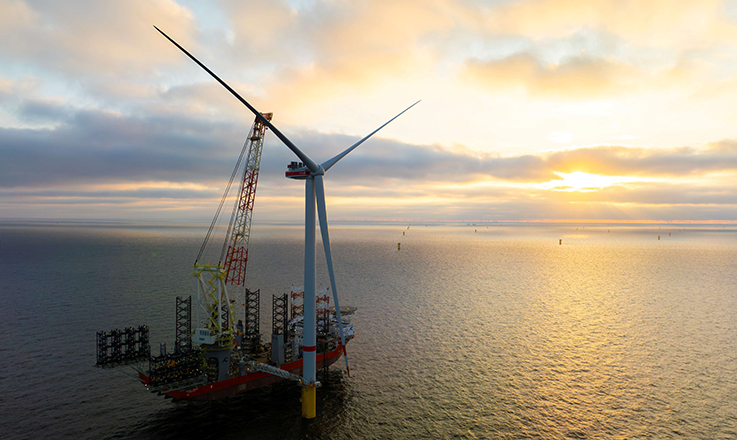
A total of 41 new offshore wind turbines with a combined capacity of 518MW were connected to the grid in the German North and Baltic seas during 2025. By the year-end, 65 foundations had been installed.
A further 19 turbines, representing 278MW of capacity, were erected but had not yet begun feeding electricity into the grid.
According to current forecasts, around 20GW of offshore wind capacity is expected to be connected to the grid by 2030.
“The federal government is now called upon to fundamentally and rapidly reform the future tendering system in close cooperation with the industry,” the associations said.
“Instead of maximising state revenues, the focus must be placed on project implementation to ensure a secure and cost-efficient energy supply. A genuine restart is now needed.”
The German government plans to return the sites that were not awarded in the August 2025 tender to the market in June this year.
However, the associations warned that this tender round also risks failure unless the necessary adjustments are discussed swiftly and implemented in time for the 2026 tenders.
“If necessary, deadlines must be slightly adjusted so that awards can be converted into contracts and projects,” they said.
The industry is also calling for stronger European cooperation. “The European cooperation promoted by the North Sea Summit to support market ramp-up and investment security sends a strong signal to the industry,” the associations noted.
“It is now crucial to implement these plans and establish a stable and reliable framework for offshore wind development.”