


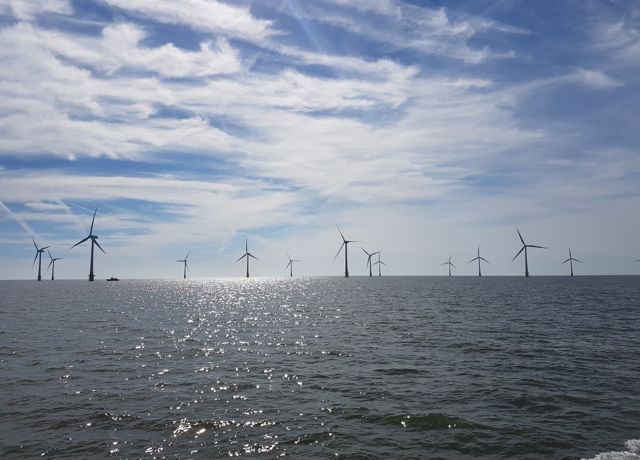
Offshore players and environmental groups have joined forces to call for the retention of environmental impact assessments following reports Berlin was willing to streamline the permitting process by not requesting EIAs in some circumstances.
German Environmental Aid, NABU, WWF, Orsted, RWE and Vattenfall have joined forces to maintain the environmental impact assessment (EIA) for offshore wind energy projects. The reason is the implementation of the “Renewable Energy Directive” (RED 3) for the expansion of wind energy at sea.
According to the current draft law from the Federal Ministry of Economics, the obligation to carry out a project-specific EIA, which examines the effects of the project on the marine environment, should be eliminated in favour of a strategic assessment in the areas yet to be designated.
“The EIA for offshore wind power has been a proven and necessary instrument in Germany for decades and allows for a forward-looking cumulative impact assessment,” said German environmental association NABU.
“However, the environmental impact assessment does not represent an obstacle to the timely expansion of offshore wind energy. Rather, the EIA creates legal certainty and is therefore an essential basis for investment decisions in offshore wind farms.
“The elimination of a mandatory EIA would neither contribute to the accelerated expansion of offshore wind energy nor ensure its sustainability.
NABU agrues the procedures could be shortened through an appropriate increase in staff and comprehensive digitalization of the approval processes.
Limiting factors in the expansion of offshore wind are currently limited production capacities and bottlenecks in the supply chain, which have already led to the announcement of delays in offshore grid connection systems in the German North Sea, the association added.
“The Federal Ministry of Economics, which is leading the implementation of RED 3, now has the opportunity to set the course for nature-friendly offshore expansion, maintain investment security and give equal consideration to climate and nature conservation,” NABU added.
“This includes maintaining an area-specific UVP.”