The wind off the northeastern US coast may be more powerful and more turbulent than previously thought, according to research by the University of Delaware.
The research, published in the Journal of Geophysical Research: Atmospheres, analysed historical data from 2003 to 2011 at the Cape Wind tower located near the centre of Nantucket Sound off Massachusetts and complementary data at the same location during 2013–2014.
It found that atmospheric conditions around Cape Wind are mainly turbulent, or unstable, which contrasts with prevailing data from European offshore wind farms in the Baltic Sea and the North Sea.
European studies of offshore wind document that atmospheric conditions there are predominantly neutral – meaning neither too windy nor too still, but somewhere in the middle, with unstable wind conditions occurring only 20% of the time, the report said.
However, the US study found unstable wind conditions for 40% to 80% of the time, depending on the time of day and the season.
The unstable conditions mean more wind power but would also mean more strain on a wind turbine’s blades, the report said.
It added that the direction of the wind also played a role in the turbulence, with a wind blowing from the north, northwest or offshore likely to be more unstable.
More research will be needed to see whether the conditions are localised to the Cape Cod area, the US east coast or are present throughout the country, the study concluded.
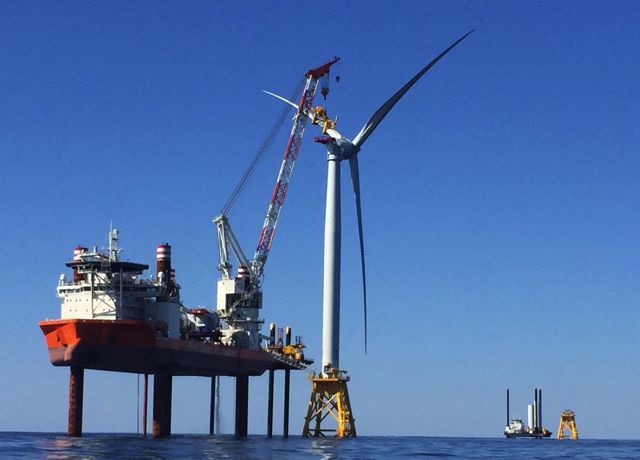
Image: turbine at the US’s first offshore wind farm at Block Island (Deepwater Wind chief executive Jeff Grybowski/Twitter)
Hard wind blows off US northeast
Study finds conditions at Cape Cod unstable 40% to 80% of the time
 By EBS