


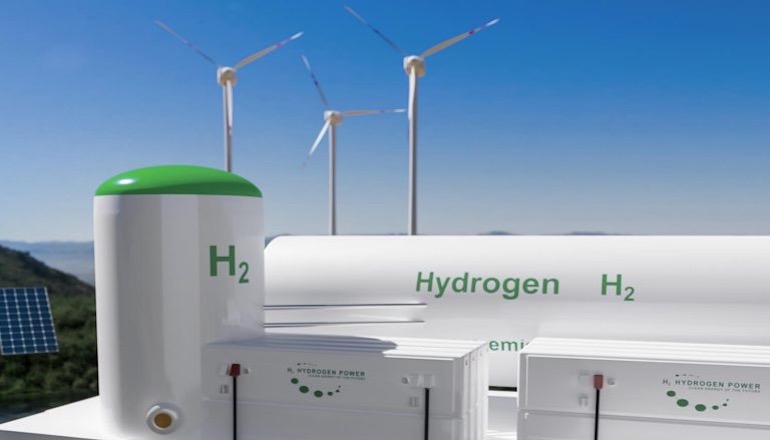
Green hydrogen developer Hy2gen has signed a memorandum of understanding (MoU) with offshore wind energy developer Ocean Connect Energy (OCE) to investigate renewable hydrogen production from offshore wind.
The MoU formalises a collaboration between the two companies to identify, evaluate, and develop favourable locations to power Hy2gen’s renewable fuel production from the gigawatt-scale offshore wind energy generation that OCE develops in the USA and worldwide.
Hy2gen USA and wind energy experts, OCE, have formed a 10-month working group to identify and mature high-capacity offshore wind energy areas where project development may be held back by constrained grid transmission, low electricity demand, or other factors.
David White, president of Hy2gen USA, said: “Where renewable hydrogen production can be built near the point of interconnect from offshore wind energy generation, we have the potential to create predictable and lasting demand for the energy.
“This makes the need for new grid transmission less urgent and the need for infrastructure investment less substantial, while accelerating wind energy project execution.”
“Renewable hydrogen can change the paradigm of where offshore wind is developed,” added Kevin Banister, chief executive officer of Ocean Connect Energy.
The research is part of Hy2gen’s strategy embracing the United States’ clean hydrogen regulatory framework established by the 2022 Inflation Reduction Act and subsequent guidelines anticipated from US Department of Treasury as well as the regulatory framework in the EU.
Hy2gen is committed to producing 100% renewable fuels meeting the highest industry sustainability standards.
To address the three pillars of temporality, additionality, and regionality, which are mandatory for renewable fuel classification, the integrated co-development of offshore wind energy projects and power-to-X projects provide a solution, the company said.
Banister said: “With its high capacity factor and ability to be built at scale, offshore wind can deliver an excellent energy profile to match the electricity demand of the next key element of the energy transition: renewable hydrogen production.
“Done right, pairing the two can result in efficient project development and capital allocation.”