


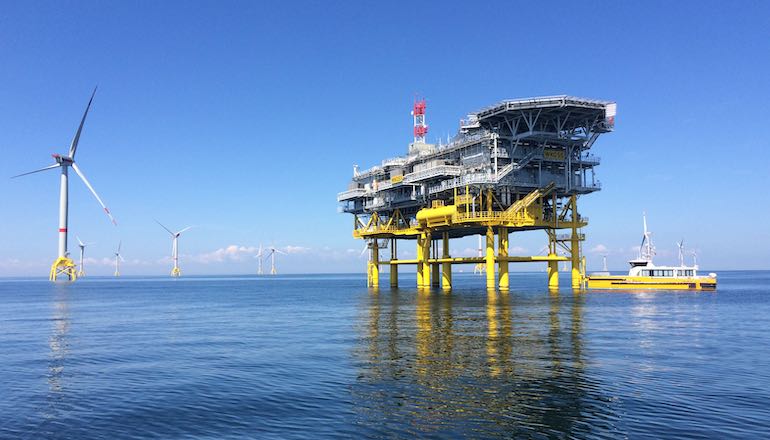
Iberdrola has completed the planning approval process for the 476MW Baltic Eagle offshore wind farm in the German Baltic Sea and has received a positive decision from Germany’s Federal Maritime and Hydrographic Agency.
The Spanish company said it has thus reached another “important milestone” and is now moving forward with the construction phase.
Iberdrola said it is currently beginning the exploration of explosive ordnance on the seabed.
The company has commissioned the large-scale investigation of the seabed and the professional disposal of possible finds to ensure a safe working environment for the construction work at the wind farm.
Iberdrola managing director of in Germany Iris Stempfle said: “We are pleased about the positive decision and are very grateful for the constructive dialogue with the authorities.
“With Baltic Eagle alone, we will supply around 475,000 households in the region with green electricity and make a further contribution to the local value chain and the German energy transition.”
Iberdrola said once the construction phase begins, all central components will be installed on site in 2023, in an intensive campaign, with commissioning scheduled for 2024.
Baltic Eagle is the second project in Iberdrola’s so-called ‘Baltic Hub’, which will have an installed capacity of more than 1.1GW by 2026 with total investment of around €3.5bn.
EEW Group Special Pipe Constructions (EEW SPC) has completed the first monopile foundation for Baltic Eagle out of the 50 units the German supplier will be manufacturing for the site.
The steel pylons are between 75 and 90 metres long.
Spanish company Windar has fabricated the first transition piece – connecting the turbine tower and the foundation – which is being tested in a mock-up trial.
Iberdrola said the manufacturing process for the offshore substation for Baltic Eagle is also advancing.
The substation will be built and operated jointly by Iberdrola and the transmission grid operator 50Hertz.