


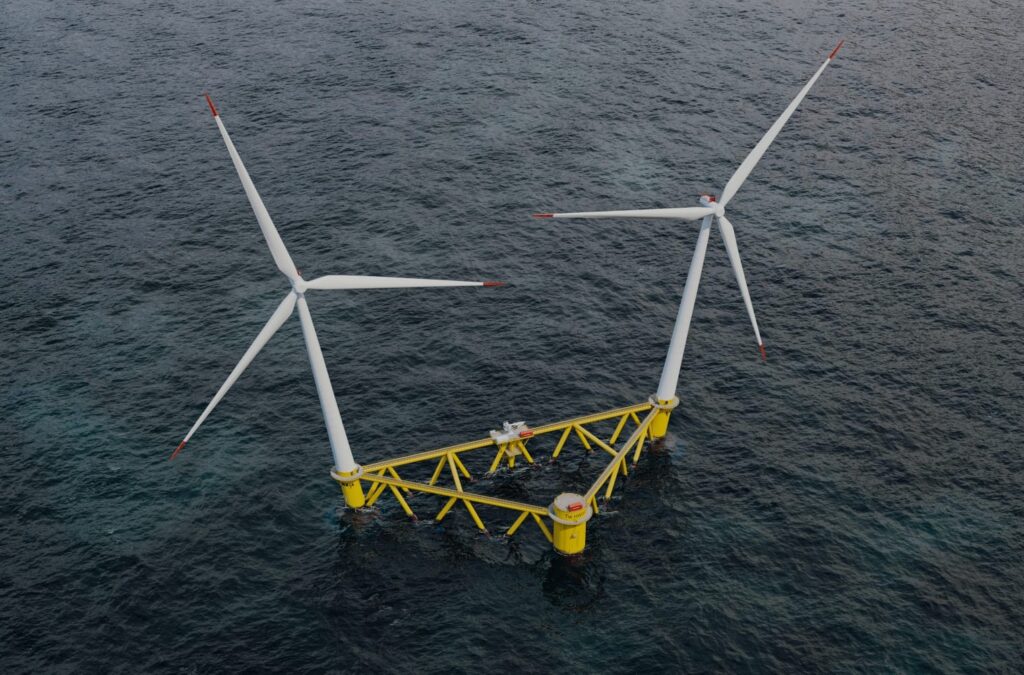
Mainstream Renewable Power and Hexicon joint venture Freja Offshore has submitted a planning application under the Swedish Economic Zone Act (SEZ) for the Mareld floating wind farm.
The site, which is more than 40km west of Orust, on the border with Norway and Denmark, has the potential to host 2.5GW, which corresponds to more than half of the entire existing electricity consumption of the Västra Götaland region.
Freja Offshore has submitted an application to the Swedish Ministry of Climate and Business to construct and operate a wind farm under the SEZ and to establish of an internal cable network under the Continental Shelf Act.
Today, the majority of the electricity consumed in the Västra Götaland region is imported.
For the west of Sweden to realise its ambitious industrial plans, and to generate the associated economic benefits, including employment prospects, large volumes of power will need to be produced locally.
By 2030, the electricity demand in the west of Sweden is expected to double when compared to current usage, and to triple by 2055.
The region plans to generate the power needed through the establishment of new wind and solar power.
“This is a significant milestone for us at Freja Offshore – after two years of hard work, and extensive stakeholder engagement, including with local communities and environmental stakeholders, we are now ready to apply for a permit that grants us the construction rights for the Mareld floating wind farm,” said chief executive of Freja Offshore Magnus Hallman.
“Floating wind power, which is already operational in other parts of Europe, has unique characteristics insofar as it can be situated a long distance offshore, addressing concerns regarding visual and audible pollution whilst being able to benefit from higher wind speeds.
“We are confident that the advantages of floating offshore wind, when combined with the industrial heritage and offshore track-record of our shareholders, give us the best possible chance of being successful in our permitting application.”