


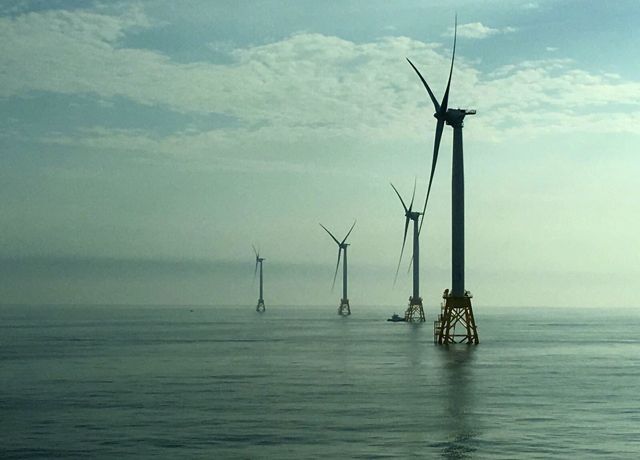
Legislators in the US state of Maryland have introduced a bill providing for a minimum of 1200MW of additional offshore wind capacity to be built by 2030.
The Maryland Clean Energy Jobs Act of 2019 (SB 516) proposes new offshore wind capacity is required beginning with at least 400MW in 2026, increasing to at least 800MW in 2028, and to at least 1.2GW in 2030.
The offshore wind capacity increases will support the bill’s proposed target requiring 25% of energy supply to come from renewable sources by 2025 and 50% by 2030.
Maryland’s current renewable portfolio standard (RPS) requires that state electricity suppliers generate 20.4% of energy supply from renewables, including at least 2.5% from offshore wind energy and 1.95% from solar energy.
The proposed legislation, under consideration by the Maryland House of Delegates, establishes new criteria for qualified offshore wind projects, opening up additional application periods for future offshore wind projects less than 10 miles off the state coast, called ‘Round 2′ offshore wind projects.
It also requires the Public Service Commission to approve of projects with “net economic, environmental and health benefits to the state” that do not increase the net rate on average customers by specified amounts.
Other proposals under the bill will establish and fund the Clean Energy Workforce Account, a programme designed to work in Maryland’s renewables sector.
The bill also calls for a study of the impacts of the revised RPS, including the feasibility of increasing it to 100% renewable energy sources by 2040.
If the legislation is passed waste-to-energy and refuse-derived fuel sources will be removed from RPS eligibility.
The introduction of the Maryland Clean Energy Jobs Act of 2019 follows similar legislation introduced last year, which failed to pass the House Economic Committee.