


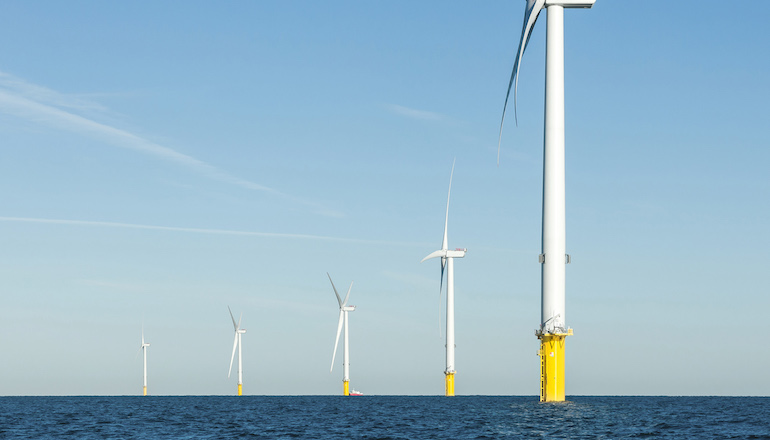
Marine consultants Partrac, together with project partners Aktis Hydraulics, have completed a certified metocean study for French offshore wind developer EDF Renewables at the floating wind Blyth Offshore Demonstrator site.
Purchased by EDF in 2014, the deeper areas of the site which is situated 14km off the Northumberland coast, are in excess of 50 metres.
The site is planned for development as a demonstration project for floating wind turbine technology.
The results of the studies will assist EDF with its future ambitions for future large-scale, commercial deployment of floating technology at the site, with a total capacity of up to 58.4MW.
During the project Partrac collated and reviewed the available metocean datasets available for the area and provided expert guidance on seabed boundary layer processes.
The data review provided the basis for the development of numerical models, which assisted EDF in understanding the average and extreme hydrodynamics and wind climate at the site.
As offshore wind farm developers turn their attentions to deeper sites and floating wind technology, the significance of these models for FEED purposes and informing site layouts is becoming increasingly important.
The increased loadings on floating turbines, means it is crucial that developers understand the forces on anchorage systems and the offshore structures.
EDF Renewables Blyth 2 project manager Mark Hazelton said: “The timescales for delivery of the project were quite tight, and also required interaction with the certification body.
“The timely completion of this project has enabled us to move forwards with engineering design contractors.”
With offices based in Newcastle close to the project area, Partrac has a long association with the Blyth site.
As metocean and geodata experts, they have been involved in a number of projects at Blyth.
Of particular significance, was their delivery of offshore marine monitoring datasets to the Environment Impact Assessment (EIA).
Partrac authored the Physical Marine Environment chapter of the Environment Statement, which included sediment transport modelling as well as a previous metocean criteria study for EDF Renewables.