


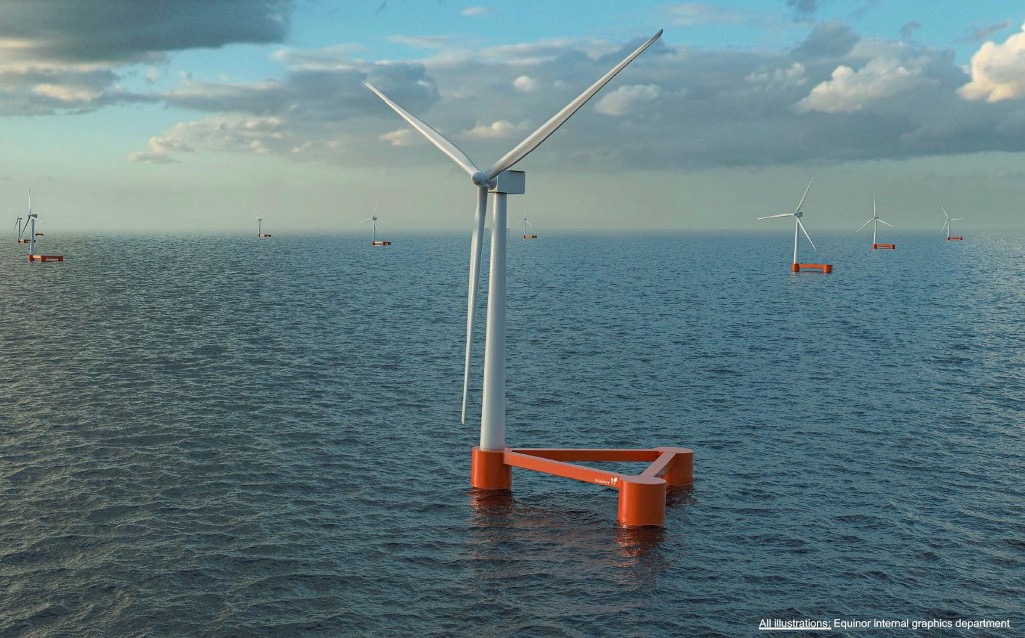
National Grid Electricity System Operator has launched its design for a plan to connect floating offshore wind capacity to the grid.
In its new design Beyond 2030: The Celtic Sea, the ESO proposes connecting 3GW into two locations in South Wales and up to 1.5GW into the South West of England, with the three proposed offshore wind Project Development Areas (PDAs) having their own grid connections.
The proposal calls for one high voltage direct current (HVDC) connection to a new South Wales Connection Node, as well as two high voltage alternating current (HVAC) connections into Carmarthenshire and North Devon.
The proposals make use of the current wider transmission infrastructure compared to other options, and – in the case of Carmarthenshire and North Devon – recommend regions with an already identified need for a substation, or an already-proposed substation (for example Llandyfaelog in Carmarthenshire).
“We have undertaken a rigorous process, in consultation with a range of stakeholders, to design the network needed to connect enough renewable capacity to power four million homes,” the ESO’s director of strategic energy planning and chief engineer Julian Leslie said.
“Our proposal has additional potential as a catalyst for coordination with future green energy developments in South Wales and South West England into the future.”
The new design is unique in that developers have yet to bid for development rights in the three seabed areas identified by the Crown Estate. The new approach, the ESO said, will allow developers to make a more informed bid based on the network recommendations, reducing risk.
It is also allowing the ESO to take a new approach on the connections queue for this Round 5 capacity by effectively ringfencing the 4.5GW in advance, so that we can proceed efficiently with the connection contract process when the seabed Agreements for Lease are awarded by the Crown Estate.